Cardio vs weights for fat loss is one of the oldest debates in fitness — and one where most people pick a side based on habit rather than evidence. The research has moved well past "just do more cardio." A 2025 meta-analysis of 31 randomized controlled trials found that the real difference between cardio and weights for fat loss is far smaller than most people assume, and that combining both produces the best results by a clear margin.
How Cardio Burns Fat
Aerobic exercise — running, cycling, rowing, swimming — burns calories primarily during the session itself. Your heart rate stays elevated, your muscles consume oxygen and fuel, and you accumulate a caloric deficit rep by rep, mile by mile.
The numbers are straightforward. A 70 kg person running at moderate intensity burns roughly 400–600 calories per hour. Cycling and rowing fall in a similar range depending on effort. This high per-session calorie burn is why cardio has traditionally been the default recommendation for fat loss.
Cardio also produces a modest afterburn effect (EPOC) — elevated oxygen consumption after the session ends — but the magnitude is relatively small for steady-state work. Most of the caloric cost happens during the activity itself.
Where cardio genuinely shines is visceral fat reduction. A 2024 network meta-analysis of 84 randomized controlled trials (N = 4,836) found that aerobic exercise, resistance training, combined training, and HIIT were all beneficial for reducing visceral adipose tissue — but aerobic exercise had a slight edge for this specific fat depot.
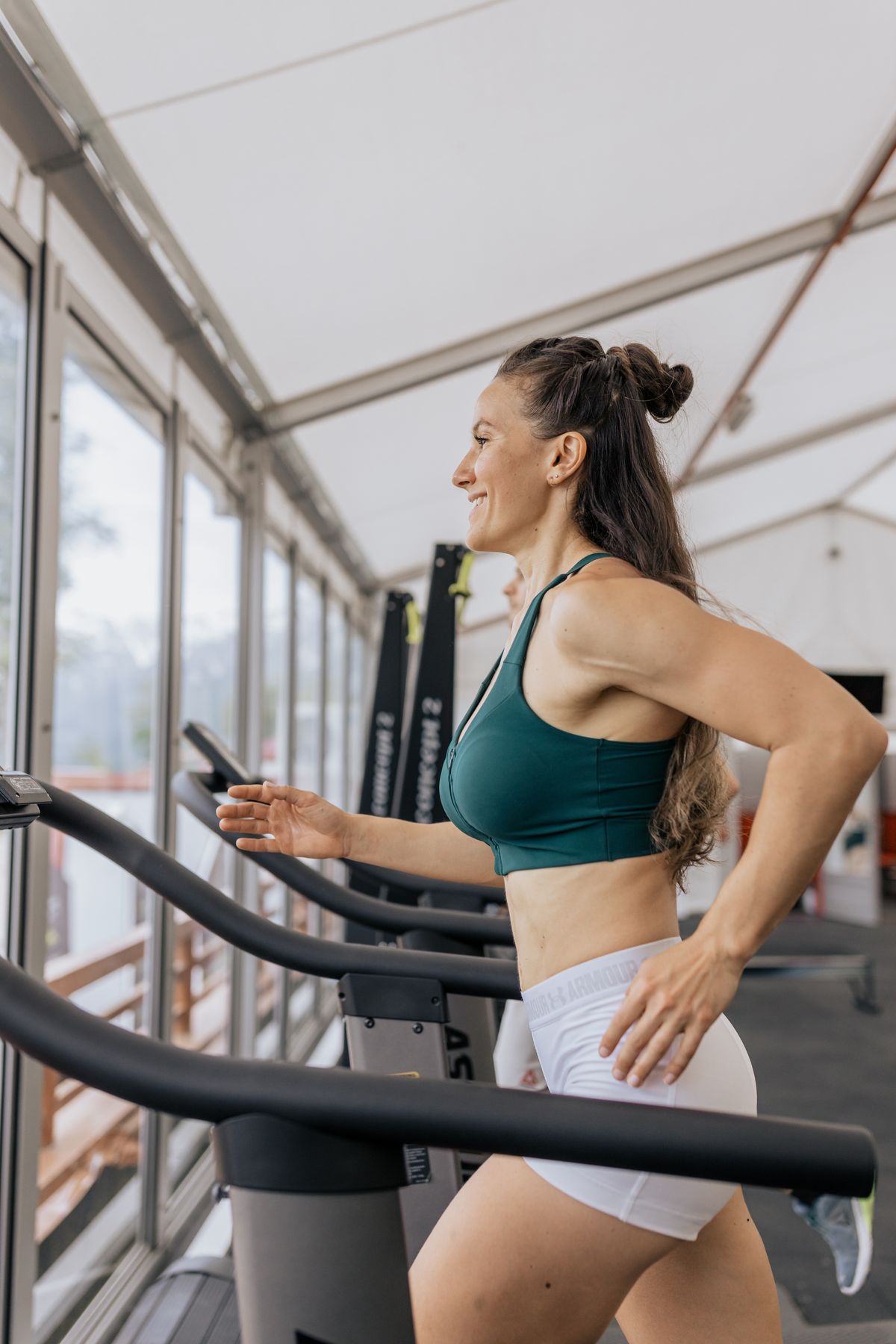 Woman exercising on a treadmill in a modern gym
How Weight Training Burns Fat
Resistance training attacks fat loss from a different angle. Instead of maximizing calorie burn during the session, it builds the metabolically active tissue — muscle — that raises your baseline energy expenditure around the clock.
A 10-week resistance training program in one study increased lean mass by 1.4 kg, reduced fat mass by 1.8 kg, and raised resting metabolic rate by 7%. That metabolic increase means more calories burned at rest — every hour of every day, not just during workouts.
Weight training also produces a meaningful EPOC effect. Research on resistance training protocols at varying intensities found an afterburn of 80–106 additional calories, with metabolism returning to baseline within roughly three hours. Hypertrophy-style training — higher volume, moderate loads — generates the most significant EPOC response.
The compounding effect is what makes resistance training powerful for fat loss over time. Each kilogram of muscle you add burns an estimated 10–13 calories per day at rest. That may sound small, but over months and years of consistent training, the cumulative impact on body composition is substantial.
Free on iOS
TRAIN SMARTER
Build custom HIIT, Tabata, AMRAP, EMOM and Circuit workouts. Precision timer, streak tracking and analytics — free on iOS.
What the Meta-Analyses Actually Show
The strongest recent evidence comes from a 2025 systematic review and meta-analysis published in the Journal of the International Society of Sports Nutrition. Researchers analyzed 31 randomized controlled trials with 1,294 adults, comparing three conditions: aerobic training alone, resistance training alone, and concurrent (combined) training.
| Outcome | Aerobic Training | Resistance Training | Combined Training |
|---|---|---|---|
| Fat mass loss | ~1.1 kg more than RT alone | Baseline | Similar to AT |
| Fat-free mass change | Loss or no change | +0.9 kg vs AT | Best preservation |
| Body fat % | Reduced | Reduced | Most reduced |
| When duration matched | No difference vs RT | No difference vs AT | — |
The headline finding: aerobic exercise produced roughly 1.1 kg (2.4 lbs) more fat loss than resistance training alone. But there is a critical caveat — when researchers controlled for total training session duration, the fat loss differences between modalities completely disappeared.
In other words, the fat loss "advantage" of cardio largely reflects the fact that cardio sessions tend to be longer, not that cardio is mechanically superior for burning fat.
Meanwhile, resistance training added 0.9 kg (2 lbs) more fat-free mass than aerobic training. That lean mass preservation is not cosmetic — it is the foundation of long-term metabolic health and sustained fat loss.
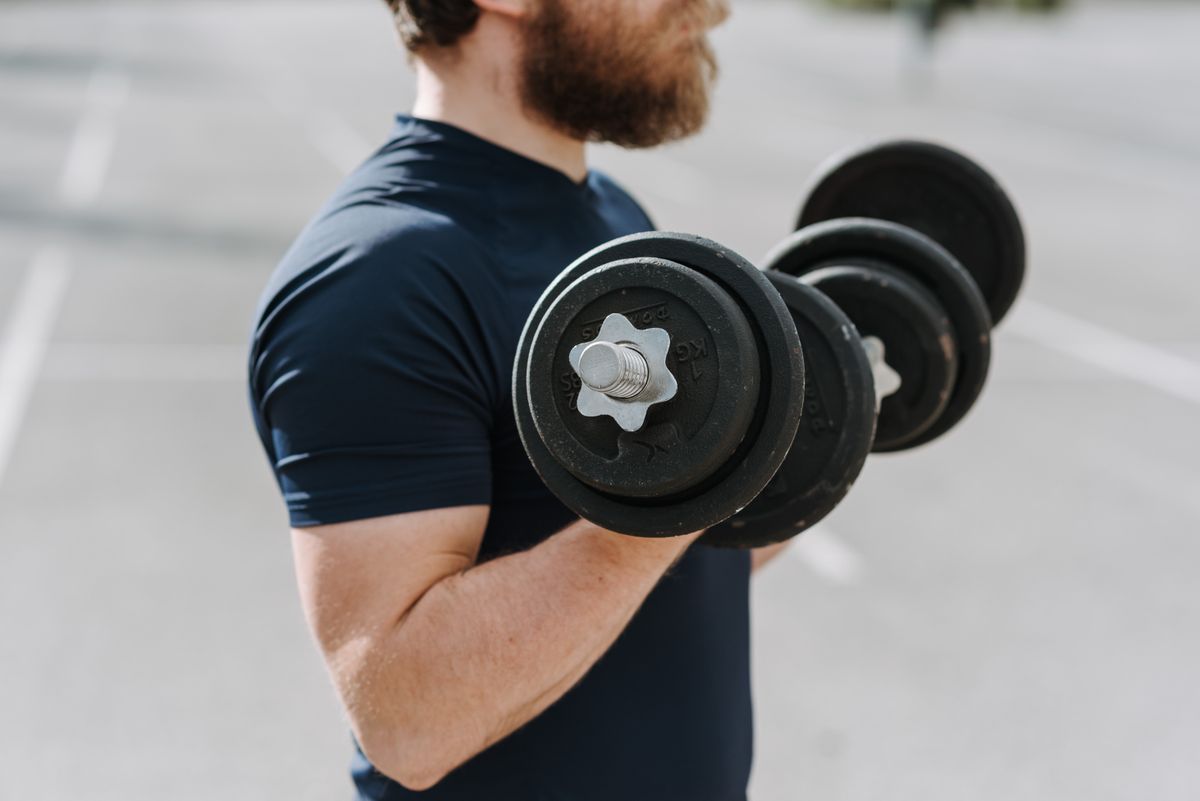 Muscular man doing exercise with dumbbells in an urban outdoor setting
The Case for Combining Both
Every recent meta-analysis points to the same conclusion: combined training produces better body composition outcomes than either modality alone.
The 2025 JISSN meta-analysis found that concurrent training was as effective as aerobic training for fat loss while preserving significantly more muscle. A separate 2024 randomized controlled trial in Frontiers in Endocrinology found that combined HIIT and resistance training improved body weight, BMI, and body fat — but muscle mass increased only in the combined group, with a 2.75% greater improvement compared to cardio alone.
The long-term health data tells the same story. The ATTICA epidemiological cohort study, tracking participants over 20 years, found that people who engaged in combined aerobic and resistance exercise had a 0.41 times lower cardiovascular disease risk compared to inactive participants — a greater reduction than aerobic exercise alone (0.54 times lower risk).
Exercise order matters
Recent research adds a practical detail: lifting weights before cardio in a combined session produces better results. Participants who performed resistance training first experienced significantly greater reductions in overall body fat and visceral fat, along with better muscular endurance and explosive strength.
How to Program Cardio and Weights for Fat Loss
The research supports a clear framework: prioritize resistance training for muscle preservation, add cardio for additional calorie burn and cardiovascular health, and combine them strategically.
A Research-Backed Weekly Template
| Day | Workout | Purpose |
|---|---|---|
| Monday | Strength (Upper Body) | Muscle preservation and metabolic rate |
| Tuesday | Cardio or HIIT (20–30 min) | Calorie burn and cardiovascular health |
| Wednesday | Strength (Lower Body) | Muscle preservation and metabolic rate |
| Thursday | Active Recovery | Walking, mobility, light movement |
| Friday | Strength (Full Body) | Muscle preservation and metabolic rate |
| Saturday | Cardio or HIIT (20–30 min) | Calorie burn and cardiovascular health |
| Sunday | Rest | Recovery |
Key programming principles
- Lift first if combining. When doing cardio and weights in the same session, always lift first for better fat loss and strength outcomes.
- Three to four resistance sessions per week. This is the minimum effective dose for preserving muscle during a deficit.
- Two cardio sessions per week. Enough for cardiovascular health and additional calorie burn without excessive fatigue or muscle loss.
- Keep a moderate caloric deficit. No amount of exercise overcomes a reckless deficit — aim for 300–500 calories below maintenance.
- Prioritize protein. Research consistently shows that 1.6–2.2 g of protein per kg of body weight supports muscle preservation during fat loss.
Track Your Fat Loss Training With Hiitify
Hiitify lets you build custom interval timers for both HIIT cardio sessions and resistance training rest periods. Track your workout streaks across strength and cardio days, monitor your weekly training consistency, and build the combined training habit that the research says delivers the best fat loss results.
Free on iOS
TRAIN SMARTER
Build custom HIIT, Tabata, AMRAP, EMOM and Circuit workouts. Precision timer, streak tracking and analytics — free on iOS.
Sources & Further Reading
Research
- (2025). Comparison of concurrent, resistance, or aerobic training on body fat loss: a systematic review and meta-analysis. Journal of the International Society of Sports Nutrition. View on PubMed
- Chen, N. et al. (2024). Effects of various exercise types on visceral adipose tissue in individuals with overweight and obesity: A systematic review and network meta-analysis of 84 randomized controlled trials. Obesity Reviews. View on Wiley
- Zhang, H. et al. (2024). Combined high-intensity interval and resistance training improves cardiorespiratory fitness more than HIIT alone. Frontiers in Endocrinology. View on PMC
- (2025). Assessment of Long-Term Engagement in Aerobic Versus Resistance Exercise on 20-Year Cardiovascular Disease Incidence: The ATTICA Epidemiological Cohort Study. View on PMC
- (2024). Effect of resistance exercise on body composition, muscle strength and cardiometabolic health during dietary weight loss in people living with overweight or obesity: a systematic review and meta-analysis. View on PMC
Further Reading
- Cardio vs. weights for fat loss — Examine
- Cardio vs Weights for Fat Loss: 36 Studies, 1 kg Difference — FitChef
- Should you do cardio before or after lifting weights? — The Conversation
Image Credits
- Cover: A Woman Doing a Barbell Squat — Pexels
- Woman on a Treadmill — Pexels
- Muscular Man Doing Exercise with Dumbbells — Pexels
All images free to use under the Pexels License.