HIIT works because it pushes your body hard — but the adaptations that make you fitter, faster, and leaner don't happen during the workout. They happen during HIIT recovery. Skip the rest, and you don't just stall your progress — you reverse it. Here's what the research says about how long to rest between HIIT sessions, what actually happens during recovery, and how to tell if you're getting enough.
The 48-Hour Rule: What the Research Shows
The most consistent finding across the scientific literature is that at least 48 hours of rest between HIIT sessions is the recommended minimum. This isn't an arbitrary number — it's grounded in how long your body takes to restore key physiological systems.
A study on HIIT recovery duration in trained rowers found that the time to return to a pre-HIIT state ranged from 6 to 38 hours depending on the type of session, the individual, and the recovery metric measured. Heart rate variability (HRV) — one of the most reliable markers of autonomic nervous system recovery — took the longest to bounce back:
- Threshold sessions (5 × 10 min): HRV recovered in 29 ± 12 hours
- Long intervals (5 × 3.5 min): HRV recovered in 16 ± 11 hours
- Sprint intervals (10 × 30s): HRV recovered in 18 ± 10 hours
Notice that the most taxing protocol pushed HRV recovery close to 41 hours at the upper end. This is why the 48-hour guideline exists — it provides a buffer that accounts for the worst-case recovery scenario.
A six-week study on recreational runners confirmed the practical implications: 2–3 HIIT sessions per week produced optimal improvements in VO₂max and time to exhaustion. Going from two to three sessions showed measurable gains. Going from three to four showed none — and athletes performing four or more sessions saw diminishing returns in aerobic power alongside a sharp increase in injury rates.
| Weekly Frequency | VO₂max Gains | Injury Risk | Recovery Quality |
|---|---|---|---|
| 2 sessions | Significant | Low | Full recovery likely |
| 3 sessions | Peak gains | Moderate | Adequate with good habits |
| 4+ sessions | Diminishing returns | High | Incomplete recovery |
 Man stretching on the gym floor during a cool-down recovery session
What Happens During Recovery: The Three Systems
HIIT creates a compound recovery demand that distinguishes it from most other training modalities. Your body isn't just recovering from one type of stress — it's rebuilding across three systems simultaneously.
1. Glycogen Replenishment
A single exhaustive HIIT session can deplete muscle glycogen stores to levels that impair performance in a subsequent session. Research shows that full glycogen replenishment takes up to 24 hours (Coyle et al., 1986), with the fastest resynthesis occurring in the first 30–60 minutes post-exercise — the so-called glycogen window.
Consuming ≥1.2 g/kg/hr of high-glycemic carbohydrates in the first 4–6 hours post-workout maximises glycogen resynthesis. If carbohydrate intake is lower than 0.8 g/kg/hr, adding 0.3–0.4 g/kg/hr of protein can compensate and enhance the recovery process.
2. Neuromuscular and Hormonal Recovery
HIIT triggers a significant cortisol response — necessary for adaptation, but problematic when chronic. Research from the Society for Endocrinology found that after just 11 days of intensified high-intensity exercise, cortisol responses to a stress test became blunted — a hallmark of overtraining. The testosterone-to-cortisol (T/C) ratio, a well-established marker of training balance, declines when catabolic processes outpace anabolic ones.
The central nervous system also needs time. While breathing returns to normal quickly, CNS recovery requires a minimum 48-hour window after a max-effort session to fully restore neuromuscular function.
3. Cardiovascular Autonomic Recovery
A 2021 systematic review in Frontiers in Physiology found that HIIT consistently improves vagally-mediated HRV markers (RMSSD and SDNN) over training blocks of several weeks — but only when adequate recovery is provided between sessions. Acute HRV suppression occurs during and immediately after HIIT, typically returning to baseline within 30–48 hours. Training before HRV has recovered means stacking stress on an already-stressed system.
The Overtraining Trap: When Recovery Fails
Overtraining syndrome (OTS) is the end stage of a continuum that begins with functional overreaching, progresses to non-functional overreaching, and culminates in full-blown OTS. A 2017 systematic review in BMC Sports Science, Medicine and Rehabilitation found that the condition is characterised by decreased performance and fatigue triggered by metabolic, immune, and hormonal dysfunctions — all resulting from an imbalance between training stress and recovery.
Free on iOS
TRAIN SMARTER
Build custom HIIT, Tabata, AMRAP, EMOM and Circuit workouts. Precision timer, streak tracking and analytics — free on iOS.
Two distinct patterns emerge in the research:
- Sympathetic overtraining: High cortisol, elevated resting heart rate, poor sleep, persistent agitation. More common with HIIT, sprinting, and power training.
- Parasympathetic overtraining: Blunted cortisol output, low motivation, persistent fatigue, reduced performance. More common with endurance sports.
The warning signs that your HIIT recovery is inadequate:
- Performance declines despite consistent training
- Resting heart rate is elevated by 5+ bpm
- Sleep quality deteriorates without obvious cause
- You feel wired but tired — agitated at rest, exhausted during workouts
- Injuries and illness become more frequent
There are currently no single reliable biomarkers to definitively diagnose overtraining — making self-monitoring and training logs critical.
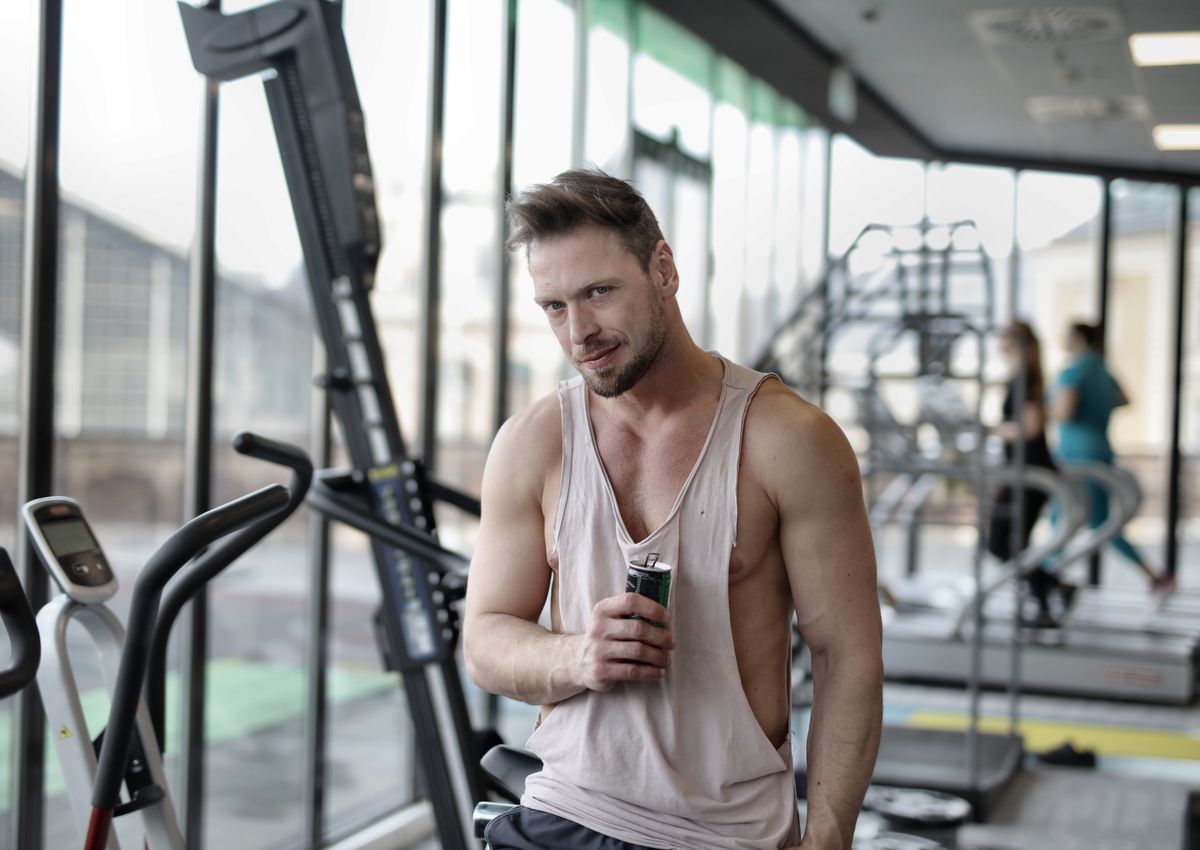 Young athlete resting after workout and drinking an energy drink in a modern gym
Recovery Strategies That Actually Work
Not all recovery methods are created equal. Here's what the evidence supports — and what it doesn't.
Sleep: The Non-Negotiable
7–9 hours of quality sleep is the single most important recovery factor. During deep sleep, growth hormone secretion peaks, protein synthesis accelerates, and cortisol levels drop to their daily minimum. A 2019 study found that morning HIIT significantly improved sleep onset latency and total sleep time — but evening HIIT without post-session carbohydrates maintained elevated cortisol, reducing sleep quality.
Nutrition: Timing and Composition
Post-HIIT nutrition is the second pillar. The evidence-based recommendations:
- Carbohydrates: ≥1.2 g/kg/hr for the first 4–6 hours (high-glycemic sources)
- Protein: 20–30g within 60 minutes post-exercise
- Daily carb intake: At least 7 g/kg body mass/day for adequate 24-hour glycogen recovery
- Hydration: Replace 150% of fluid lost during the session
Chronic energy deficiency and glycogen depletion amplify cortisol, norepinephrine, and cytokine responses — and may be direct determinants of emerging overtraining.
Foam Rolling: Helpful for Soreness, Not Performance
A study using the Tabata protocol found that self-myofascial release with a foam roller reduced DOMS (delayed onset muscle soreness) by 50% compared to 20% for the control leg, and increased hip range of motion by approximately 4.2%. However, foam rolling showed poor effects on restoring performance values. Use it for comfort, not for faster adaptation.
Active Recovery
Light movement on rest days — walking, easy cycling, gentle yoga — promotes blood flow without adding training stress. The research supports using active recovery to maintain circulation and reduce perceived soreness, but the effect on actual physiological recovery metrics is modest.
Age and Individual Variation
The 48-hour guideline is based primarily on studies of young, athletic populations who recover faster due to age-related biological factors. For older adults, the timeline extends.
Research on adults with a mean age of ~61 years found that significant health benefits — including increased peak power output — were achieved with HIIT performed as infrequently as once every five days. If you're over 40 or new to high-intensity training, starting with two sessions per week and spacing them 72 hours apart is a sensible approach.
HRV monitoring offers a practical solution for personalising recovery. A 2021 methodological review found that HRV-guided training — performing high-intensity sessions only when HRV indicates readiness — produced equal or better fitness outcomes than fixed schedules, while reducing the risk of overtraining. Many wearables (Apple Watch, Garmin, Whoop, Oura) now track HRV automatically, making this approach accessible.
Track Your HIIT Recovery With Hiitify
Smart recovery starts with knowing what you did — and when. Hiitify logs every HIIT session with precise work and rest intervals, so you can see your training frequency at a glance and ensure you're spacing sessions properly. Build custom workouts, track your training streak, and keep your weekly HIIT volume in the evidence-based sweet spot of two to three sessions.
Free on iOS
TRAIN SMARTER
Build custom HIIT, Tabata, AMRAP, EMOM and Circuit workouts. Precision timer, streak tracking and analytics — free on iOS.
Sources & Further Reading
Research
-
Stanley, J. et al. (2018). HIIT recovery duration for rowing performance. HIIT Science. View on HIIT Science
-
Tschakert, G. et al. (2022). The Salzburg 10/7 HIIT shock cycle study: effects of a 7-day HIIT shock microcycle. BMC Sports Science, Medicine and Rehabilitation. View on PMC
-
Cadegiani, F.A. & Kater, C.E. (2017). Hormonal aspects of overtraining syndrome: a systematic review. BMC Sports Science, Medicine and Rehabilitation. View on PMC
-
Bellinger, P.M. (2020). Recovery from Different High-Intensity Interval Training Protocols: Comparing Well-Trained Women and Men. International Journal of Sports Physiology and Performance. View on PMC
-
Pearcey, G.E.P. et al. (2015). Self-Myofascial Release Effect With Foam Rolling on Recovery After High-Intensity Interval Training. Journal of Athletic Training. View on PMC
-
Michael, S. et al. (2017). Fundamentals of glycogen metabolism for coaches and athletes. Nutrition Research Reviews. View on PMC
-
Kiviniemi, A.M. et al. (2021). Heart Rate Variability-Guided Training for Enhancing Cardiac-Vagal Modulation, Aerobic Fitness, and Endurance Performance. Frontiers in Physiology. View on PMC
Further Reading
- HIIT and Cortisol: Are Your Workouts Backfiring? — Healthline
- Overtraining and the Endocrine System — Society for Endocrinology
- How Often Should You Do HIIT? Weekly Limits & Recovery — Fitryte
Image Credits
- Cover: Sweaty muscular sportsman resting after workout in gym — Pexels
- Man stretching on the floor — Pexels
- Young athlete resting after workout and drinking energy drink — Pexels
All images free to use under the Pexels License.