The debate between HIIT and LISS has been running almost as long as the treadmills people do them on. High-Intensity Interval Training pushes you to your limit in short bursts. Low-Intensity Steady State keeps you at a comfortable pace for longer. Both burn fat — but they do it through very different mechanisms, and the research is clearer than most fitness influencers make it sound.
What LISS Actually Is (And Isn't)
LISS stands for Low-Intensity Steady State cardio. It means maintaining a consistent effort at 60–70% of your maximum heart rate for 30–60 minutes. Think brisk walking, easy cycling, light swimming, or a relaxed jog.
The key word is steady. Your heart rate stays in one zone, your breathing is controlled enough to hold a conversation, and your body relies primarily on aerobic energy systems — meaning it burns a higher proportion of fat for fuel during the session.
This is where the "fat-burning zone" myth originated. Exercise at lower intensities does use a higher percentage of fat for energy. But percentage isn't the whole picture.
The Fat-Burning Zone Myth
Here's the maths that most gym posters leave out. If you walk for 45 minutes and burn 300 calories, roughly 60% comes from fat — that's 180 fat calories. If you do a 20-minute HIIT session and burn 250 calories, about 35–40% comes from fat — that's roughly 90 fat calories during the workout itself.
LISS wins during the session. But HIIT fights back after it.
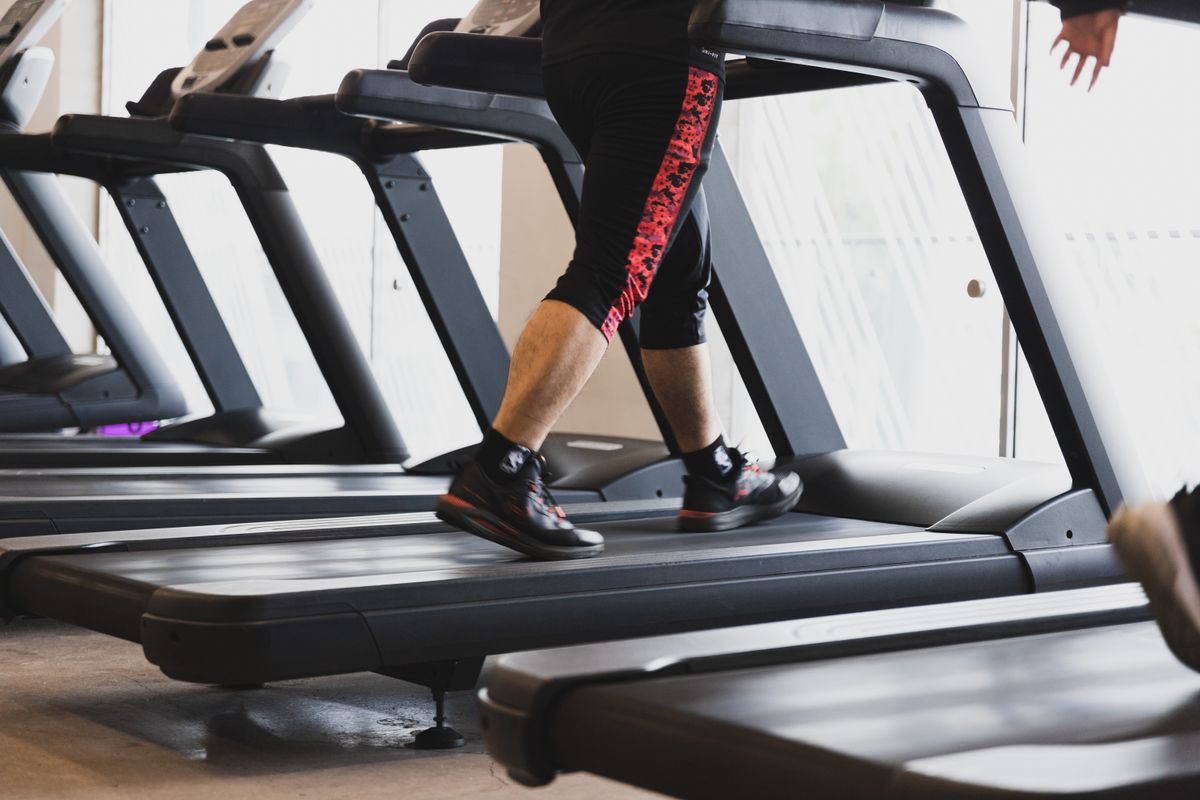 Person walking on a treadmill at steady pace in a gym
The Afterburn Effect: Where HIIT Pulls Ahead
Excess Post-Exercise Oxygen Consumption (EPOC) is the scientific name for the afterburn effect — the elevated calorie burn your body sustains after intense exercise. A 2024 study published in Scientific Reports found that interval running produced significantly greater EPOC and lipid oxidation than isocaloric continuous running in men with obesity. The HIIT group's lipid oxidation rate was 1.01 mg/kg/min compared to 0.76 mg/kg/min for the continuous group.
Another study published in the International Journal of Exercise Science found post-exercise energy expenditure was 110 calories after sprint intervals versus 64 calories after steady-state cardio — a 72% increase.
When you add EPOC to the picture, a 20-minute HIIT session burns roughly 295 total calories (230 during + 65 after), while a 40-minute LISS session totals about 325 calories (300 during + 25 after). HIIT gets you within striking distance in half the time.
Free on iOS
TRAIN SMARTER
Build custom HIIT, Tabata, AMRAP, EMOM and Circuit workouts. Precision timer, streak tracking and analytics — free on iOS.
What the Meta-Analyses Say About Fat Loss
Individual studies are useful, but meta-analyses — which pool data from dozens of trials — give us the clearest picture.
A 2023 systematic review in the International Journal of Environmental Research and Public Health analysed randomised clinical trials comparing HIIT and moderate-intensity continuous training (MICT) in young and middle-aged adults. The findings: HIIT produced comparable or superior fat loss across most metrics, with significant advantages for waist circumference and percent fat mass.
A 2025 meta-analysis published in BMC Sports Science, Medicine and Rehabilitation confirmed that HIIT cycling demonstrated comparable efficacy to MICT for improving body fat percentage, fat mass, and lean body mass — while outperforming MICT in reducing BMI among obese individuals.
The bottom line from the research: when total energy expenditure is matched, both methods produce similar fat loss. But HIIT achieves it in less time and with additional metabolic benefits.
| Metric | HIIT | LISS |
|---|---|---|
| Calories per minute | 12–13 | 9–10 |
| Fat % used during session | 35–40% | ~60% |
| Post-exercise burn (EPOC) | High (65–110 kcal) | Low (25–64 kcal) |
| Time required | 15–25 min | 30–60 min |
| Muscle preservation | Better | Lower |
| Recovery demand | High | Low |
| Injury risk | Moderate–High | Low |
HIIT Preserves More Muscle
This is one of the most underrated differences. A study comparing five weeks of HIIT and continuous cardio found that the LISS group lost significant lean body mass, while the HIIT group preserved theirs. For anyone training for body composition — not just the number on the scale — this matters enormously.
HIIT's short, intense efforts recruit fast-twitch muscle fibres in a way that steady-state cardio simply doesn't. The result is a training stimulus that looks more like resistance training from a muscle-preservation standpoint. Research in adults aged 18–30 confirms that HIIT best promotes fat oxidation and muscle retention in this population.
 Woman sprinting outdoors in athletic gear
When LISS Is the Better Choice
None of this means LISS is inferior. It has clear advantages in specific situations:
- Recovery days. LISS promotes blood flow and nutrient delivery to muscles without adding fatigue. It's the ideal active recovery tool between hard training days.
- Beginners. If you're new to exercise, jumping straight into HIIT increases injury risk. Building an aerobic base with 2–4 weeks of LISS first creates the cardiovascular foundation HIIT demands.
- Joint issues. Walking and cycling are far gentler than burpees and box jumps. If you have knee, hip, or back concerns, LISS lets you stay active without aggravating them.
- Stress management. HIIT spikes cortisol. If you're already under high life stress, adding intense training can backfire. LISS provides the mental and cardiovascular benefits of exercise without the hormonal hit.
- High training volume. Strength athletes who already train hard 4–5 days a week often prefer LISS because it doesn't compete with recovery from their primary training.
The Best Approach: Use Both
The research — and most experienced coaches — point to the same conclusion: combine them.
A practical weekly split might look like this:
| Day | Session | Duration | Intensity |
|---|---|---|---|
| Monday | HIIT | 20 min | 85–95% MHR |
| Tuesday | LISS | 30–40 min | 60–70% MHR |
| Wednesday | Rest or LISS | 20–30 min | 60–65% MHR |
| Thursday | HIIT | 20 min | 85–95% MHR |
| Friday | LISS | 30–40 min | 60–70% MHR |
| Saturday | HIIT (optional) | 15–20 min | 85–95% MHR |
| Sunday | Rest | — | — |
This gives you 2–3 HIIT sessions for metabolic stimulus and muscle preservation, with LISS sessions filling recovery days and keeping total weekly activity high. The combination targets fat loss from multiple angles — high EPOC, elevated resting metabolism, and sustained aerobic fat oxidation.
Track Your Cardio With Hiitify
Whether you're doing 20-second sprints or 40-minute walks, Hiitify lets you build custom interval timers for both HIIT and LISS sessions. Set your work and rest periods, track your completed sessions, and build the consistency that actually drives fat loss — all from one app.
Free on iOS
TRAIN SMARTER
Build custom HIIT, Tabata, AMRAP, EMOM and Circuit workouts. Precision timer, streak tracking and analytics — free on iOS.
Sources & Further Reading
Research
- Hu, M. et al. (2024). Acute interval running induces greater excess post-exercise oxygen consumption and lipid oxidation than isocaloric continuous running in men with obesity. Scientific Reports. View on Nature
- Wewege, M. et al. (2017). The effects of high-intensity interval training vs. moderate-intensity continuous training on body composition in overweight and obese adults. Obesity Reviews. View on PubMed
- Meng, C. et al. (2023). Effect of High-Intensity Interval Training vs. Moderate-Intensity Continuous Training on Fat Loss and Cardiorespiratory Fitness in the Young and Middle-Aged: A Systematic Review and Meta-Analysis. Int J Environ Res Public Health. View on PMC
- Zhang, H. et al. (2025). The effects of HIIT and MICT on body fat composition and cardiopulmonary fitness in adults: a meta-analysis of randomized controlled trials. BMC Sports Science, Medicine and Rehabilitation. View on Springer
- Schaun, G. Z. et al. (2022). Excess Post-Exercise Oxygen Consumption and Substrate Oxidation Following High-Intensity Interval Training: Effects of Recovery Manipulation. View on PubMed
Further Reading
- HIIT vs LISS for Fat Loss: Evidence-Based Guide — FitnessRec
- LISS Cardio: Benefits, Heart Rate, Workout — Healthline
- 3 Differences Between LISS Cardio and HIIT — Fitbod
Image Credits
- Cover: Athletes running on running track — Pexels
- Active person walking on treadmill in gym — Pexels
- Woman in black sports bra running — Pexels
All images free to use under the Pexels License.