Most people assume that HIIT without jumping is somehow a softer version of the real thing. It isn't. Intensity is about how hard your heart and muscles are working — not about how high you can leap. A fast-paced squat pulse or a standing mountain climber walk-out will push your heart rate past 85% of its max with both feet firmly on the ground. This full-body, no-jump HIIT workout delivers the same cardiovascular and fat-burning benefits without a single plyometric movement.
Why No-Jump HIIT Works
The science behind HIIT has never required jumping. What it requires is repeated bouts of near-maximal effort followed by brief recovery periods. As long as your heart rate reaches the right zone, the training effect is the same.
A 2025 meta-analysis by Li and Dong published in Frontiers in Physiology examined 14 randomised controlled trials involving 500 sedentary participants and found that HIIT produced significant cardiovascular improvements regardless of exercise type. Specifically, HIIT reduced systolic blood pressure by 5.02 mmHg (P < 0.0001), diastolic blood pressure by 2.35 mmHg, and improved flow-mediated dilation — a key marker of vascular health — with a large effect size (SMD = 1.12, P = 0.006). These results came from protocols using 10–30 minute sessions at 75–95% of maximum heart rate, with no requirement for impact-based exercises.
A 2025 narrative review by Ko, So, and Park in the Journal of Cardiovascular Development and Disease reinforced this finding across 39 studies, concluding that HIIT safely improves blood pressure, lipid profiles, VO2peak, and body composition — even in high-risk populations including people with cardiovascular disease and metabolic syndrome.
The takeaway: your heart does not know whether you jumped or not. It only knows how hard it is working.
Impact vs Intensity: The Numbers
Jumping is not just unnecessary for HIIT — it adds substantial mechanical stress. Research on ground reaction forces shows that simple jumps produce 3.5–5 times your bodyweight in force on every landing, with rates of force development around 500 times bodyweight per second. Over hundreds of repetitions in a typical plyometric HIIT session, that load accumulates.
| Factor | No-Jump HIIT | Jump-Based HIIT |
|---|---|---|
| Heart rate zone | 80–90% max | 80–90% max |
| Landing force per rep | 1x bodyweight | 3.5–5x bodyweight |
| Joint stress | Low | High |
| Noise level | Minimal | Significant |
| Injury risk | Low | Moderate to high |
| Cardiovascular benefit | Significant | Significant |
| Calorie burn (per hour) | ~330–460 | ~400–600 |
The cardiovascular stimulus is equivalent. The mechanical cost is dramatically lower.
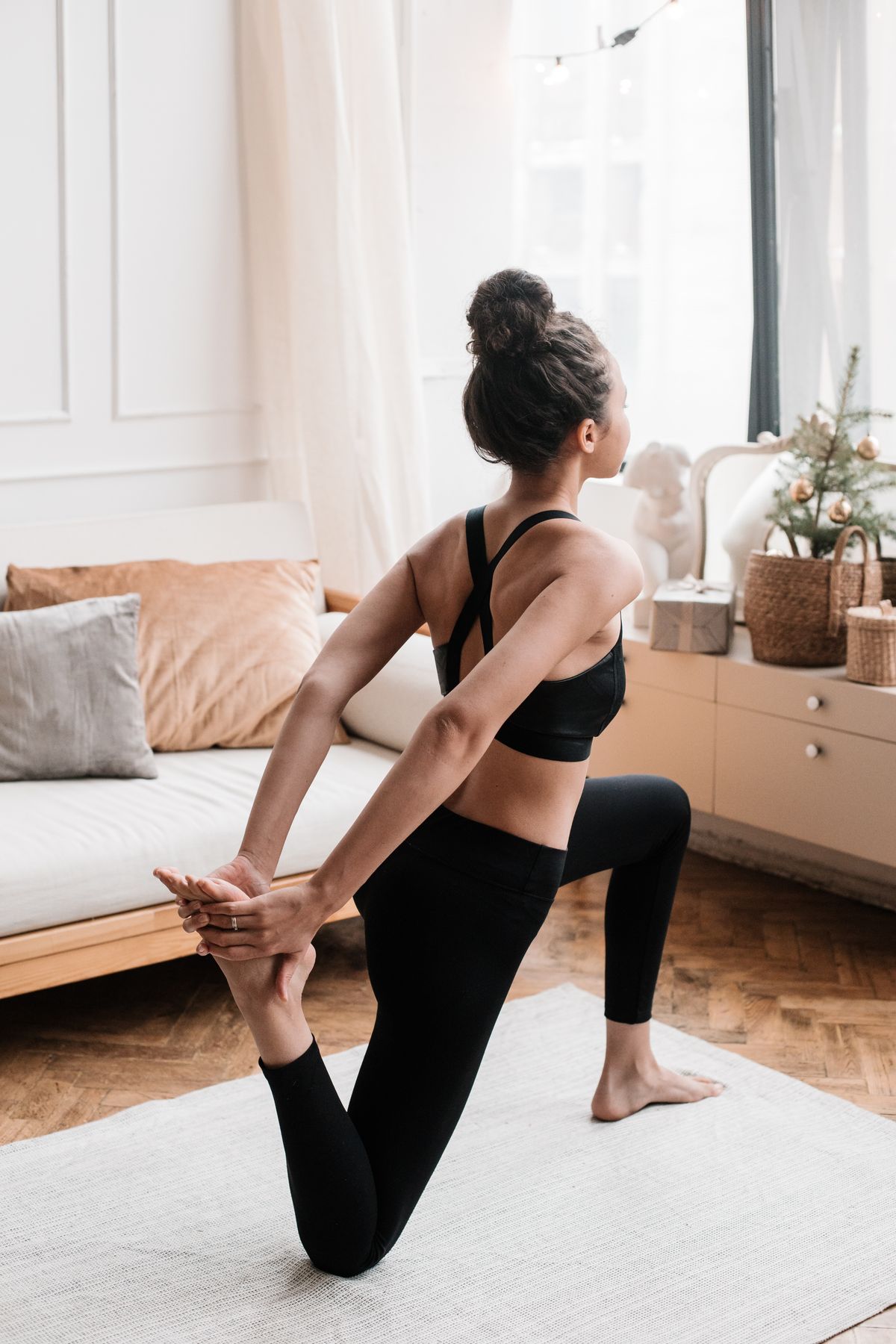 Woman stretching in a lunge position at home in workout clothes
Free on iOS
TRAIN SMARTER
Build custom HIIT, Tabata, AMRAP, EMOM and Circuit workouts. Precision timer, streak tracking and analytics — free on iOS.
The 20-Minute No-Jump Full-Body HIIT Workout
This routine uses a 40 seconds work / 20 seconds rest interval structure. Perform all five exercises in a round, rest 60 seconds, then repeat for three total rounds. Total time: approximately 20 minutes.
Every exercise keeps at least one foot on the ground at all times.
Round 1 — Lower Body and Cardio
| Exercise | Work | Rest |
|---|---|---|
| Squat to calf raise | 40s | 20s |
| Reverse lunges (alternating) | 40s | 20s |
| Lateral shuffles (3 steps each way) | 40s | 20s |
| Glute bridge march | 40s | 20s |
| Standing fast marches | 40s | 20s |
Rest 60 seconds
Round 2 — Upper Body and Core
| Exercise | Work | Rest |
|---|---|---|
| Push-up to shoulder tap | 40s | 20s |
| Standing boxing combos | 40s | 20s |
| Mountain climber walk-outs | 40s | 20s |
| Dead bugs | 40s | 20s |
| Plank to downward dog | 40s | 20s |
Rest 60 seconds
Round 3 — Full Body Finisher
| Exercise | Work | Rest |
|---|---|---|
| Squat pulse (3 pulses, stand) | 40s | 20s |
| Inchworms | 40s | 20s |
| Standing knee-to-elbow (alternating) | 40s | 20s |
| Glute bridges (fast) | 40s | 20s |
| Standing fast marches (all-out) | 40s | 20s |
Exercise Breakdowns
Squat to calf raise: Stand with feet shoulder-width apart. Lower into a squat until your thighs are parallel to the floor, then drive up and rise onto your toes at the top. The calf raise at the top adds a balance challenge and keeps your heart rate elevated without any impact.
Mountain climber walk-outs: From standing, hinge at the hips and walk your hands out to a plank position. Slowly bring one knee toward your chest, then the other, then walk your hands back and stand. This is the low-impact version of traditional mountain climbers — same muscles, zero pounding.
Standing boxing combos: Stand in a staggered stance and throw jab-cross-hook-uppercut sequences at full speed. Keep your core braced and your feet planted. This is one of the most effective no-impact calorie burners because it engages your shoulders, arms, core, and legs simultaneously.
Squat pulse: Lower into a squat and pulse three times at the bottom — small, controlled movements that keep tension on your quads and glutes — then stand fully. The sustained time under tension makes this brutally effective without any jumping.
Inchworms: From standing, bend forward and walk your hands out to a plank. Hold for one second, then walk your hands back to your feet and stand. This targets your hamstrings, core, shoulders, and chest in a single flowing movement.
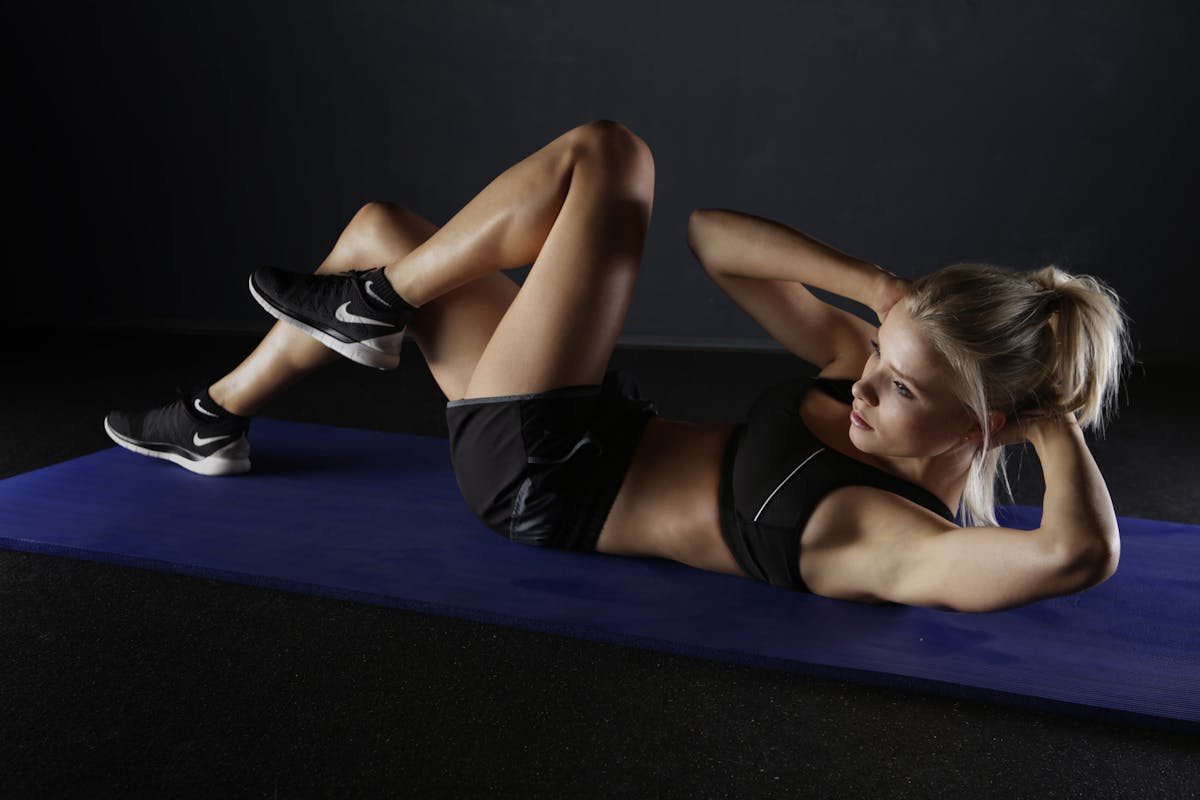 Woman doing a core exercise on a blue exercise mat
How to Progress Without Adding Jumps
A 2023 study by Venegas-Carro et al. in PLOS ONE compared six weeks of jump-based HIIT against running-based HIIT and found that exercise modality profoundly affected training adaptations. The running group improved relative VO2max by 7.6%, while the jumping group saw greater gains in leg strength — plantar flexion improved 12.8% and knee extension by 8.2%. The lesson: you can get different benefits by varying what you do, not by adding impact.
Here is how to make this workout harder over time:
- Extend work intervals — move from 40/20 to 45/15 or 50/10
- Add light dumbbells — hold 1–3 kg weights during squats, lunges, and marches
- Shorten round rest — drop from 60 seconds to 45 seconds, then 30
- Slow the eccentric phase — take 3 seconds to lower during squats and lunges
- Add a fourth round — repeat Round 3 as a burnout finisher
Each of these progressions increases intensity without requiring a single jump.
Track Your No-Jump HIIT With Hiitify
Hiitify makes it easy to programme this exact routine — set custom 40/20 intervals, build all three rounds with 60-second breaks, and track your sessions week by week. Monitor your workout frequency, log your progressions, and use streak tracking to stay consistent. When you can see your effort over time, skipping a session gets harder.
Free on iOS
TRAIN SMARTER
Build custom HIIT, Tabata, AMRAP, EMOM and Circuit workouts. Precision timer, streak tracking and analytics — free on iOS.
Sources & Further Reading
Research
- Li, G. & Dong, D. (2025). A meta-analysis of the effects of high-intensity interval training on circulatory system-related indicators in sedentary populations. Frontiers in Physiology. View on Frontiers
- Ko, J.M., So, W.Y. & Park, S.E. (2025). Narrative Review of High-Intensity Interval Training: Positive Impacts on Cardiovascular Health and Disease Prevention. Journal of Cardiovascular Development and Disease. View on PMC
- Venegas-Carro, M. et al. (2023). Jumping vs. running: Effects of exercise modality on aerobic capacity and neuromuscular performance after a six-week high-intensity interval training. PLOS ONE. View on PLOS ONE
Further Reading
- Low Impact HIIT Workout Routine and Benefits — REP Fitness
- HIIT Workouts Without Jumping — CNN
- 10 Low Impact HIIT Exercises and Workouts — PureGym
Image Credits
- Cover: Woman in active wear exercising on yoga mat — Pexels
- Woman exercising at home — Pexels
- Woman exercising on mat — Pexels
All images free to use under the Pexels License.