Most people think training abs means lying on the floor doing endless crunches. But a HIIT workout for abs does something crunches can't — it builds core strength and burns the fat covering those muscles at the same time. In 20 minutes, you can hit every layer of your core with more intensity and efficiency than a traditional ab routine ever delivers.
Why HIIT Works for Core Training
The case for combining HIIT with core work is backed by two separate lines of research: muscle activation and fat loss.
On the activation side, HIIT movements demand constant anti-extension and anti-rotation from your core muscles. Exercises like mountain climbers, plank variations, and bicycle crunches force your rectus abdominis, obliques, and transverse abdominis to fire continuously — not just during the concentric phase of a crunch, but throughout every second of every interval.
An ACE-commissioned study led by Peter Francis at San Diego State University used electromyography (EMG) to compare 13 common ab exercises. The bicycle crunch ranked first for rectus abdominis activation — producing 248% of the muscle activity of a standard crunch — and second for oblique activation. Several other HIIT-friendly movements, including the captain's chair knee raise and vertical leg crunch, also outperformed traditional crunches.
On the fat loss side, a 2018 meta-analysis by Maillard et al. published in Sports Medicine analysed 39 studies involving 617 subjects and found that HIIT significantly reduced total fat mass (p = 0.003), abdominal fat mass (p = 0.007), and visceral fat mass (p = 0.018). That last number matters most — visceral fat wraps around your organs and is the most metabolically dangerous type of body fat.
The practical takeaway: a HIIT ab workout attacks the problem from both sides. You strengthen the muscles and reduce the fat hiding them.
The Muscles You're Training
Your "abs" are actually four distinct muscle groups, and a well-designed HIIT core routine should hit all of them:
| Muscle | Location | Function | Key Exercises |
|---|---|---|---|
| Rectus abdominis | Front of abdomen | Trunk flexion (the "six-pack" muscle) | Bicycle crunches, V-ups |
| External obliques | Sides of abdomen | Rotation and lateral flexion | Cross-body mountain climbers, Russian twists |
| Internal obliques | Beneath external obliques | Rotation and lateral flexion (opposite direction) | Dead bugs, Pallof presses |
| Transverse abdominis | Deepest layer | Spinal stability and compression | Planks, hollow body holds |
Research confirms that the rectus abdominis, external obliques, and internal obliques collectively account for over 87% of muscle activation during plank-based exercises. The transverse abdominis — your deepest core muscle — acts as a natural weight belt, stabilising your spine during every high-intensity movement.
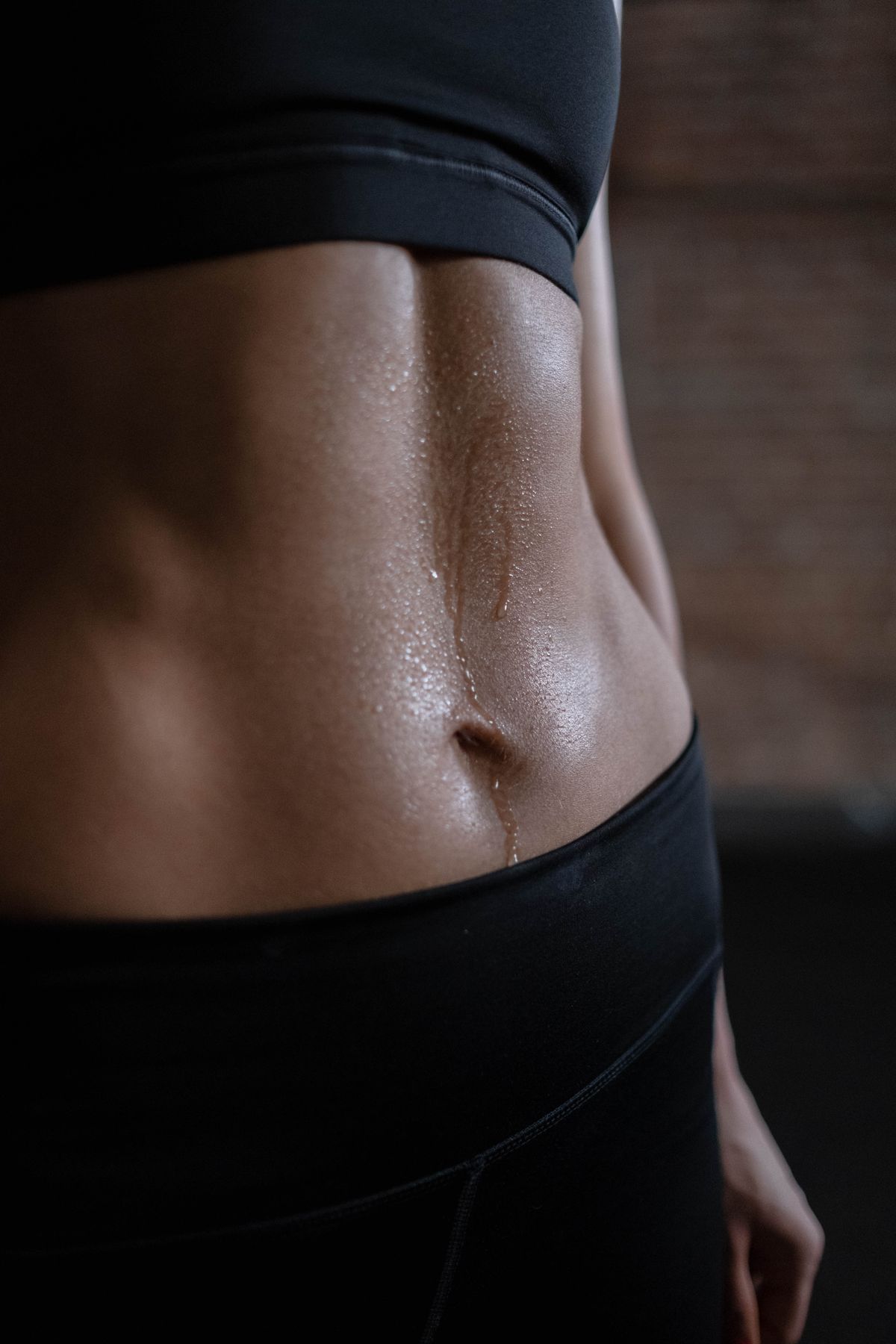 Close-up view of a person's toned core muscles
Free on iOS
TRAIN SMARTER
Build custom HIIT, Tabata, AMRAP, EMOM and Circuit workouts. Precision timer, streak tracking and analytics — free on iOS.
The 20-Minute HIIT Abs Routine
This routine uses a 40 seconds on / 20 seconds rest interval structure across four rounds. Each round contains five exercises, and you get a 60-second rest between rounds. Total time: 20 minutes.
Round 1 — Anti-Extension Focus
| Exercise | Work | Rest |
|---|---|---|
| High plank hold | 40s | 20s |
| Mountain climbers | 40s | 20s |
| Dead bugs | 40s | 20s |
| Plank shoulder taps | 40s | 20s |
| Hollow body hold | 40s | 20s |
Rest 60 seconds
Round 2 — Rotation Focus
| Exercise | Work | Rest |
|---|---|---|
| Bicycle crunches | 40s | 20s |
| Cross-body mountain climbers | 40s | 20s |
| Russian twists | 40s | 20s |
| Side plank (left) | 40s | 20s |
| Side plank (right) | 40s | 20s |
Rest 60 seconds
Round 3 — Flexion Focus
| Exercise | Work | Rest |
|---|---|---|
| V-ups | 40s | 20s |
| Reverse crunches | 40s | 20s |
| Toe touches | 40s | 20s |
| Flutter kicks | 40s | 20s |
| Leg raises | 40s | 20s |
Rest 60 seconds
Round 4 — Full Core Finisher
| Exercise | Work | Rest |
|---|---|---|
| Bear crawl hold | 40s | 20s |
| Bicycle crunches | 40s | 20s |
| Plank jacks | 40s | 20s |
| Mountain climbers | 40s | 20s |
| Hollow body hold | 40s | 20s |
Exercise Breakdowns
Mountain climbers: Start in a high plank. Drive one knee toward your chest, then switch legs rapidly while keeping your hips level. The moment your hips start piking upward, slow down — maintaining a flat back is what keeps your core working.
Bicycle crunches: Lie face up with your hands behind your head. Lift your shoulder blades off the floor and drive your right elbow toward your left knee while extending your right leg. Alternate sides in a controlled pedalling motion. The ACE study found this exercise produced 248% more rectus abdominis activation than a standard crunch.
Dead bugs: Lie on your back with arms extended toward the ceiling and knees bent at 90 degrees. Slowly lower your right arm and left leg toward the floor simultaneously, keeping your lower back pressed firmly into the ground. Return and repeat on the opposite side.
Hollow body hold: Lie face up. Press your lower back into the floor, then lift your arms overhead and your legs off the ground. Hold the position with your body forming a shallow curve. This is one of the most effective transverse abdominis exercises because it demands total core compression.
Bear crawl hold: Start on all fours. Lift your knees just 2–3 inches off the ground and hold. Your quads, hip flexors, and entire core must fire to maintain this position. Deceptively brutal.
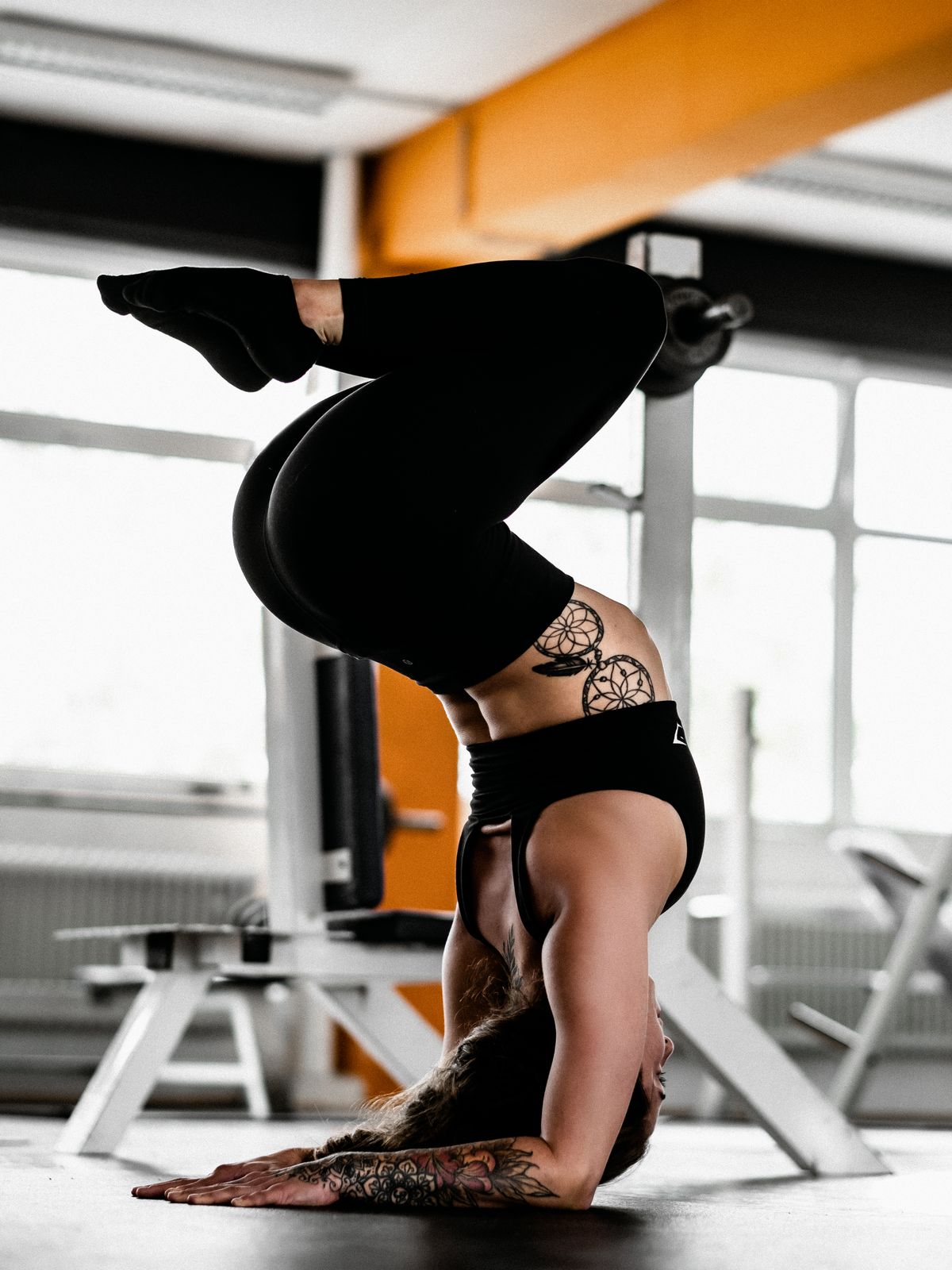 Woman doing a core exercise on a mat in a gym
How to Progress This Routine
Once the 40/20 structure starts feeling manageable, you have several options to increase difficulty without adding time:
- Increase work intervals — move to 45 seconds on / 15 seconds off
- Add load — hold a dumbbell during Russian twists, or wear a weighted vest for planks
- Reduce rest between rounds — drop from 60 seconds to 30 seconds
- Add tempo — slow down the eccentric phase of V-ups and bicycle crunches to a 3-second count
A 2025 review in Sports examining HIIT and neuromuscular adaptation found that progressive overload through increased intensity — rather than simply adding volume — was the most effective driver of continued strength gains. The same principle applies to core training: make each rep harder before adding more reps.
Common Mistakes to Avoid
- Pulling on your neck during crunches. Your hands support your head — they don't lift it. If your neck hurts, cross your arms over your chest instead.
- Letting your hips sag during planks. A drooping plank shifts the load from your core to your lower back. Squeeze your glutes and brace your abs as if someone is about to push you.
- Going too fast. Speed without control is wasted effort. A slow, controlled bicycle crunch activates more muscle than a frantic one.
- Skipping the deep core. Hollow body holds and dead bugs aren't glamorous, but they train the transverse abdominis — the muscle most responsible for a flat, stable midsection.
Track Your Ab Workouts With Hiitify
Hiitify lets you build custom interval timers for this exact routine — set your 40/20 work-rest intervals, programme all four rounds, and track your sessions over time. Watch your consistency build with workout streaks and see your core training frequency at a glance.
Free on iOS
TRAIN SMARTER
Build custom HIIT, Tabata, AMRAP, EMOM and Circuit workouts. Precision timer, streak tracking and analytics — free on iOS.
Sources & Further Reading
Research
- Francis, P. (2014). Abs! Abs! Abs! ACE ProSource. View on ACE Fitness
- Maillard, F. et al. (2018). Effect of High-Intensity Interval Training on Total, Abdominal and Visceral Fat Mass: A Meta-Analysis. Sports Medicine. View on Springer
- PMC Review (2025). The Role of High-Intensity Interval Training (HIIT) in Neuromuscular Adaptations: Implications for Strength and Power Development. Sports. View on PMC
- Oliva-Lozano, J. M. & Muyor, J. M. (2022). Surface Electromyographic Activity of the Rectus Abdominis and External Oblique during Isometric and Dynamic Exercises. Journal of Functional Morphology and Kinesiology. View on PMC
Further Reading
- The Best Exercises for a HIIT Abs Workout — PureGym
- Mountain Climbers for Abs: Your Secret Weapon for a Strong Core — Gym Mikolo
- A Brutal 20-Minute Abs Workout — Coach
Image Credits
- Cover: A woman planking on a yoga mat — Pexels
- Close-up view of a person's abs — Pexels
- Woman exercising in gym — Pexels
All images free to use under the Pexels License.