One of the most common questions beginners ask is simple: how long should a HIIT workout be? The answer matters more than you might think — because with HIIT, going longer doesn't mean getting better results. In fact, the research shows that shorter sessions often outperform longer ones.
Here's what the science says about the optimal HIIT workout duration, how much is too much, and how to structure your sessions for maximum effect.
The Research-Backed Sweet Spot: 15–25 Minutes
The most comprehensive evidence on HIIT workout duration comes from a 2019 meta-analysis by Wen et al. published in the Journal of Sports Science & Medicine, which analysed 53 randomised controlled trials. The key finding: to maximise improvements in VO₂max (the gold standard for cardiovascular fitness), HIIT sessions should include at least 15 minutes of high-intensity work using intervals of 2 minutes or longer.
But total session time — including warm-up, rest intervals, and cool-down — typically lands in the 20–30 minute range for most effective protocols.
A separate 2018 meta-analysis on young athletes found that the average HIIT session lasted 28 ± 15 minutes, yet produced greater endurance improvements than longer alternative training protocols averaging 38 ± 24 minutes. In other words, HIIT achieved more in less time — a pattern that repeats across the literature.
Why Not Longer?
Because HIIT relies on near-maximal effort. If you're truly working at 85–95% of your maximum heart rate, sustaining that intensity beyond 25–30 minutes becomes physiologically unsustainable. If you can comfortably do 45 minutes of "HIIT," the intensity likely isn't high enough to qualify.
Even 10 Minutes Works
The good news for anyone short on time: even brief HIIT sessions produce real results.
The same meta-analysis by Wen et al. found that short-interval (≤30 seconds), low-volume (≤5 minutes of total work) HIIT still produced significant VO₂max improvements compared to control groups (effect size = 0.79–1.65, p < 0.05). These aren't marginal gains — they're clinically meaningful.
A study at the University of Texas pushed this further, finding that just 120 seconds of sprint intervals (30 sets of 4-second all-out sprints) performed three times per week for eight weeks improved cardiovascular fitness, muscle power, and endurance capacity.
The practical takeaway: 10–15 minutes of well-structured HIIT is enough to move the needle, especially if you're a beginner or returning to exercise after a break. You don't need a 30-minute session to start seeing benefits.
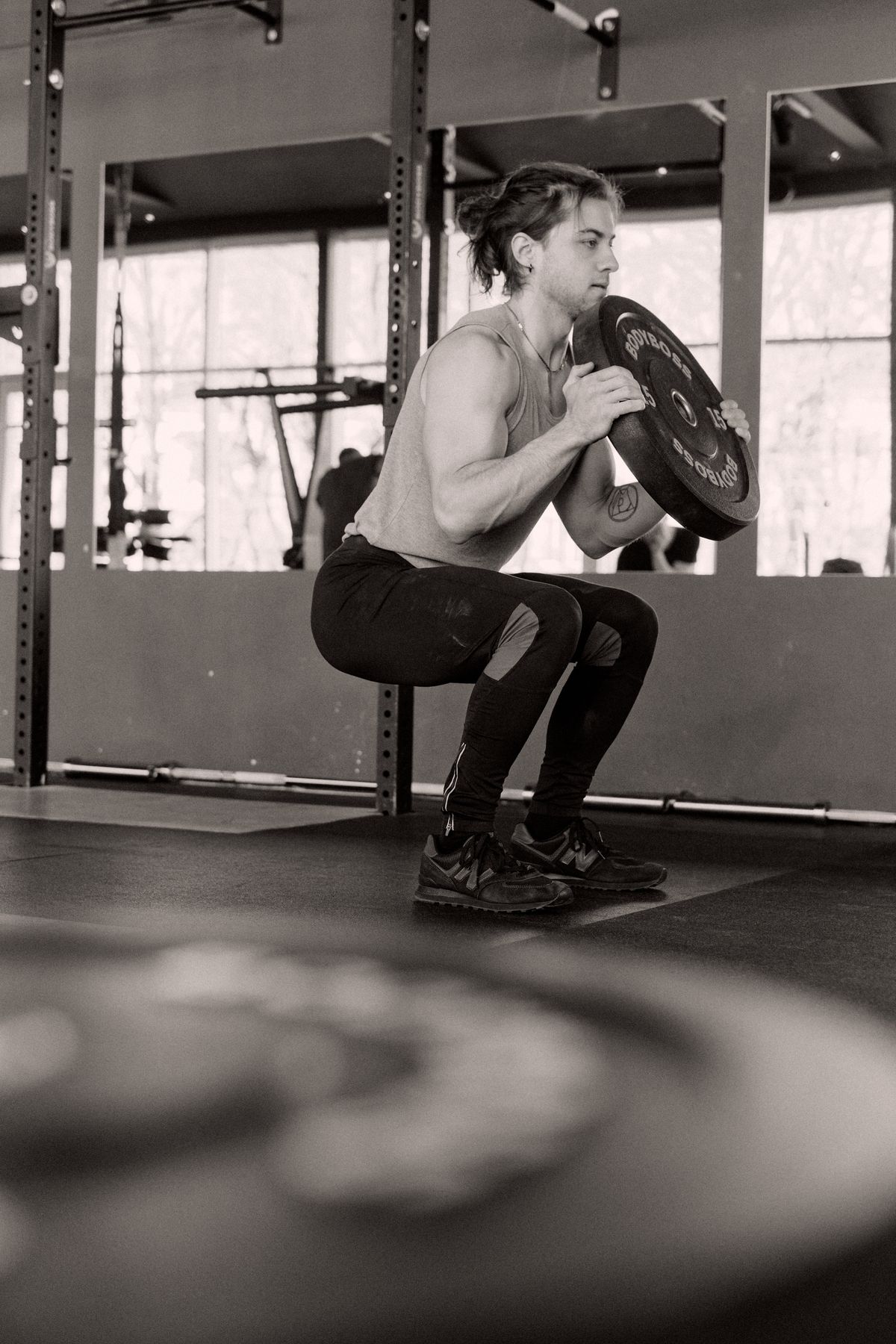 Man performing squats with a weight plate in a modern gym setting
Why 20 Minutes May Beat 30
One of the more surprising findings in recent research comes from a 2022 study published in Frontiers in Physiology by Li et al. The team compared 20-minute and 30-minute HIIT sessions in healthy young men and found that the shorter session was superior on several measures:
Free on iOS
TRAIN SMARTER
Build custom HIIT, Tabata, AMRAP, EMOM and Circuit workouts. Precision timer, streak tracking and analytics — free on iOS.
- BDNF (brain-derived neurotrophic factor) increased significantly after the 20-minute session but not after the 30-minute session
- Cognitive function improved immediately after the 20-minute session (faster Stroop test times, better digit span scores)
- Cortisol levels were significantly higher in the 30-minute group
- Blood lactate was also significantly elevated in the 30-minute group
The researchers concluded that 20 minutes of HIIT is more effective than 30 minutes for promoting brain health markers and cognitive performance. The additional 10 minutes didn't add benefit — it added stress.
This aligns with a broader principle in exercise science: the dose-response curve for HIIT is not linear. There's a clear point of diminishing returns, and for most people, it sits around the 20–25 minute mark.
The Weekly Cap: 30–40 Minutes Above 90% HRmax
Session length is only half the equation. Weekly volume matters just as much — and here, the research is clear about an upper limit.
A study by Jinger Gottschall found that approximately 30–40 minutes of training above 90% maximum heart rate per week is the recommended ceiling. Exceeding this threshold increases the risk of overreaching — a precursor to overtraining syndrome characterised by fatigue, poor sleep, mood disturbance, and declining performance.
| Weekly Structure | Sessions | Duration Each | Total High-Intensity Time |
|---|---|---|---|
| Minimum effective | 2 | 10–15 min | ~20–30 min |
| Optimal | 2–3 | 15–25 min | ~30–45 min |
| Overreaching risk | 4+ | 25+ min | 50+ min |
The sweet spot for most people: two to three sessions per week, each lasting 15–25 minutes, with at least one rest day between sessions.
The Cortisol Question: When HIIT Backfires
HIIT is a powerful training stimulus — but it's also a significant physiological stressor. Every session triggers a cortisol response, which is normal and necessary for adaptation. The problem arises when sessions are too long, too frequent, or both.
Research from the Society for Endocrinology shows that during periods of excessive high-intensity training, both ACTH and cortisol responses become blunted — a hallmark of overtraining syndrome. The body essentially stops responding normally to exercise stress.
The practical signs that your HIIT sessions are too long:
- You feel exhausted rather than energised after workouts
- Your sleep quality declines
- You're getting injured more often
- Your performance plateaus or drops
- You feel irritable or anxious on rest days
If any of these sound familiar, the fix is usually simple: shorter sessions, not more sessions.
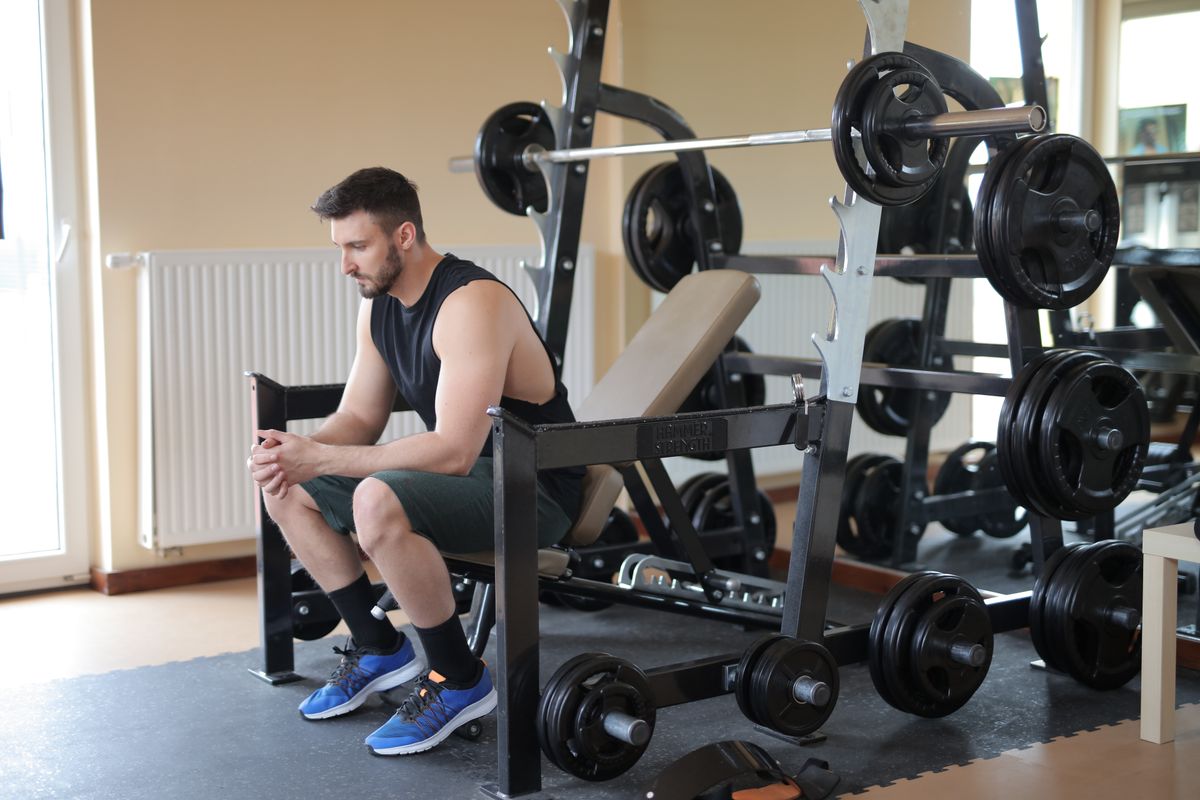 Man sitting on a bench press in the gym taking a recovery break between sets
HIIT Duration by Format
Different HIIT protocols have natural session lengths built into their structure. Here's a quick reference:
| Format | Typical Session Length | Work:Rest Ratio |
|---|---|---|
| Tabata | 4–16 min (1–4 exercises) | 20s : 10s |
| Classic HIIT | 15–25 min | 30s : 15–30s |
| EMOM | 10–20 min | Varies by reps |
| AMRAP | 10–20 min | Continuous |
| Circuit Training | 20–30 min | Station-based |
| Sprint Intervals | 10–15 min | 10–30s : 60–120s |
A single Tabata block is only 4 minutes — but it should feel brutal. Three to four Tabata blocks with 60-second rests between them gives you a 16–20 minute session that's both time-efficient and highly effective.
How to Structure Your HIIT by Experience Level
Beginner (0–3 months)
- Session length: 10–15 minutes
- Work intervals: 15–20 seconds
- Rest intervals: 40–45 seconds
- Frequency: 2 sessions per week
- Focus: Master movement patterns before adding speed
Intermediate (3–12 months)
- Session length: 15–25 minutes
- Work intervals: 30–45 seconds
- Rest intervals: 15–30 seconds
- Frequency: 2–3 sessions per week
- Focus: Increase intensity and reduce rest periods progressively
Advanced (12+ months)
- Session length: 20–30 minutes
- Work intervals: 45–120 seconds
- Rest intervals: 30–60 seconds (1:1 ratio)
- Frequency: 3 sessions per week
- Focus: Long intervals at 85–95% HRmax for maximum VO₂max gains
The meta-analysis data supports this progression: long intervals (≥2 min) with high volume (≥15 min) produce the largest VO₂max improvements — but only when you've built the fitness base to sustain that intensity.
Track Your HIIT Duration With Hiitify
Getting the duration right is easier when your timer does the thinking for you. Hiitify lets you build custom HIIT workouts with precise work and rest intervals, set total round counts and exercise numbers to hit your target session length, and switch between Tabata, EMOM, AMRAP, and classic interval formats. Whether you're programming a focused 12-minute Tabata session or a 25-minute circuit, the app keeps you on track with audio cues and countdown timers — so you can focus on intensity, not the clock.
Free on iOS
TRAIN SMARTER
Build custom HIIT, Tabata, AMRAP, EMOM and Circuit workouts. Precision timer, streak tracking and analytics — free on iOS.
Sources & Further Reading
Research
-
Wen, D. et al. (2019). Effects of different protocols of high intensity interval training for VO₂max improvements in adults: A meta-analysis of randomised controlled trials. Journal of Science and Medicine in Sport. View on PubMed
-
Li, Q. et al. (2022). A Shorter-Bout of HIIT Is More Effective to Promote Serum BDNF and VEGF-A Levels and Improve Cognitive Function in Healthy Young Men. Frontiers in Physiology. View on PMC
-
Engel, F.A. et al. (2018). High-Intensity Interval Training Performed by Young Athletes: A Systematic Review and Meta-Analysis. Frontiers in Physiology. View on PMC
-
Xie, B. et al. (2022). Effects of High-Intensity Interval vs. Moderate-Intensity Continuous Training on Cardiac Rehabilitation in Patients With Cardiovascular Disease: A Systematic Review and Meta-Analysis. Frontiers in Cardiovascular Medicine. View on PMC
-
Milanović, Z. et al. (2015). Effectiveness of High-Intensity Interval Training (HIT) and Continuous Endurance Training for VO₂max Improvements: A Systematic Review and Meta-Analysis of Controlled Trials. Sports Medicine, 45(10), 1469–1481. View on PubMed
Further Reading
- Optimal Duration for HIIT Workouts — Gavin Meenan
- How Much HIIT Is Enough? — Les Mills
- HIIT and Cortisol: Are Your Workouts Backfiring? — Healthline
Image Credits
- Cover: Women performing high knees exercise in gym — Pexels
- Man doing squats at the gym — Pexels
- Man resting on bench press in gym — Pexels
All images free to use under the Pexels License.