You have been working out for two weeks and the mirror looks exactly the same. Your weight has not budged. You are starting to wonder if any of this is actually working. Here is the reassuring truth: how long before you see results from working out depends on what kind of results you are measuring — and the science shows that your body starts changing far earlier than you think.
The Results You Feel Before You See
The first benefits of exercise are invisible — but they are real, measurable, and they arrive fast.
Within your first few sessions, your brain releases endorphins, serotonin, and brain-derived neurotrophic factor (BDNF) — a cocktail that improves mood, reduces anxiety, and sharpens focus. A 2023 meta-analysis in the British Journal of Sports Medicine by Singh et al., covering 97 reviews and over 128,000 participants, found that physical activity reduced symptoms of depression, anxiety, and psychological distress — with effects comparable to psychotherapy for mild to moderate depression.
These are not placebo effects. A landmark study of 1.2 million US adults published in The Lancet Psychiatry found that people who exercised regularly reported 43% fewer days of poor mental health per month compared to those who did not exercise.
Most beginners report noticeable improvements in energy, mood, and sleep quality within the first 7–14 days of consistent training — long before anything changes in the mirror.
What Happens Inside Your Body (Weeks 2–6)
While you are waiting for visible results, your body is making rapid internal adaptations that set the foundation for everything that follows.
Neural Adaptation: Strength Before Size
In the first 2–4 weeks of strength training, almost all of your strength gains come from your nervous system — not bigger muscles. Your brain learns to recruit more motor units simultaneously, fire them more rapidly, and coordinate muscle fibres more efficiently. A 2025 systematic review and meta-analysis in Scientific Reports confirmed that these neuromuscular adaptations are the primary driver of early strength gains in untrained individuals.
This is why beginners often feel noticeably stronger after just two weeks — even though their muscles have not visibly changed. The strength is real; it is just coming from a different source.
Cardiovascular Adaptation
Your heart and lungs start adapting within the first 2–3 weeks. Resting heart rate begins to drop, stroke volume increases, and the same walk or jog that left you breathless in week one feels measurably easier by week three.
A meta-analysis published in the Journal of Sports Science & Medicine found that untrained adults improved their VO2 max by 10–20% within 8–12 weeks of consistent training. The steepest gains happen in the first 6–8 weeks — the less fit you are at the start, the faster you improve.
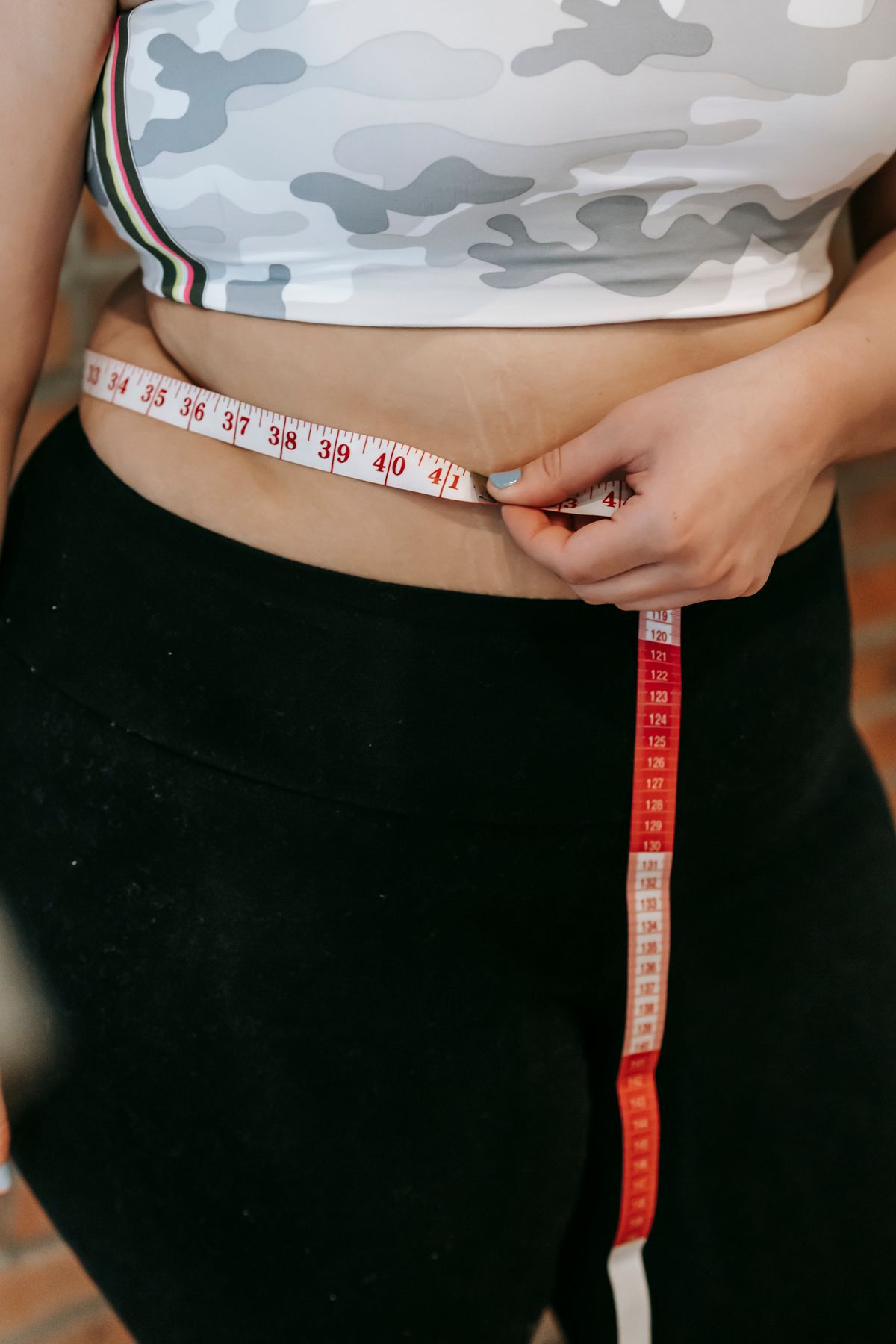 Woman measuring her waist with a tape measure while wearing activewear
Free on iOS
TRAIN SMARTER
Build custom HIIT, Tabata, AMRAP, EMOM and Circuit workouts. Precision timer, streak tracking and analytics — free on iOS.
When Visible Changes Appear (Weeks 8–12)
This is the window most people are actually asking about — and the research is consistent.
Body composition changes — visible muscle definition and fat loss — typically become noticeable between 8 and 12 weeks of consistent training. A 2023 meta-analysis in Nutrients examining HIIT's effect on body composition found significant reductions in body fat percentage and fat mass across interventions lasting 8–12 weeks.
For strength specifically, the timeline is faster. Sperlich et al. (2018) found that untrained adults performing daily 6-minute bodyweight circuits achieved strength gains of 7–27% in just four weeks. After the initial neural adaptation phase (weeks 1–4), muscle hypertrophy — actual increases in muscle fibre size — begins contributing to further strength gains from week 4–6 onward.
The ACSM notes that within 3–6 months of regular resistance training, beginners can improve their muscular fitness by 25–100% — a range that reflects the enormous potential for improvement in people who have never trained before.
The Full Results Timeline
| Timeframe | What Changes | What You Notice |
|---|---|---|
| Days 1–7 | Endorphin and serotonin release | Better mood, reduced stress |
| Weeks 1–2 | Sleep regulation, neural adaptation begins | More energy, improved sleep |
| Weeks 2–4 | Motor unit recruitment, early cardiovascular gains | Feel stronger, less breathless |
| Weeks 4–6 | Muscle hypertrophy begins, VO2 max rising | Clothes fit differently, stamina improves |
| Weeks 8–12 | Body composition shifts, measurable fat loss | Visible muscle definition, weight changes |
| 3–6 months | 25–100% strength gains, significant VO2 max improvement | Clear physical transformation |
The key insight: exercise works on multiple timelines simultaneously. If you are only watching the mirror or the scale, you are missing the majority of the progress happening inside your body.
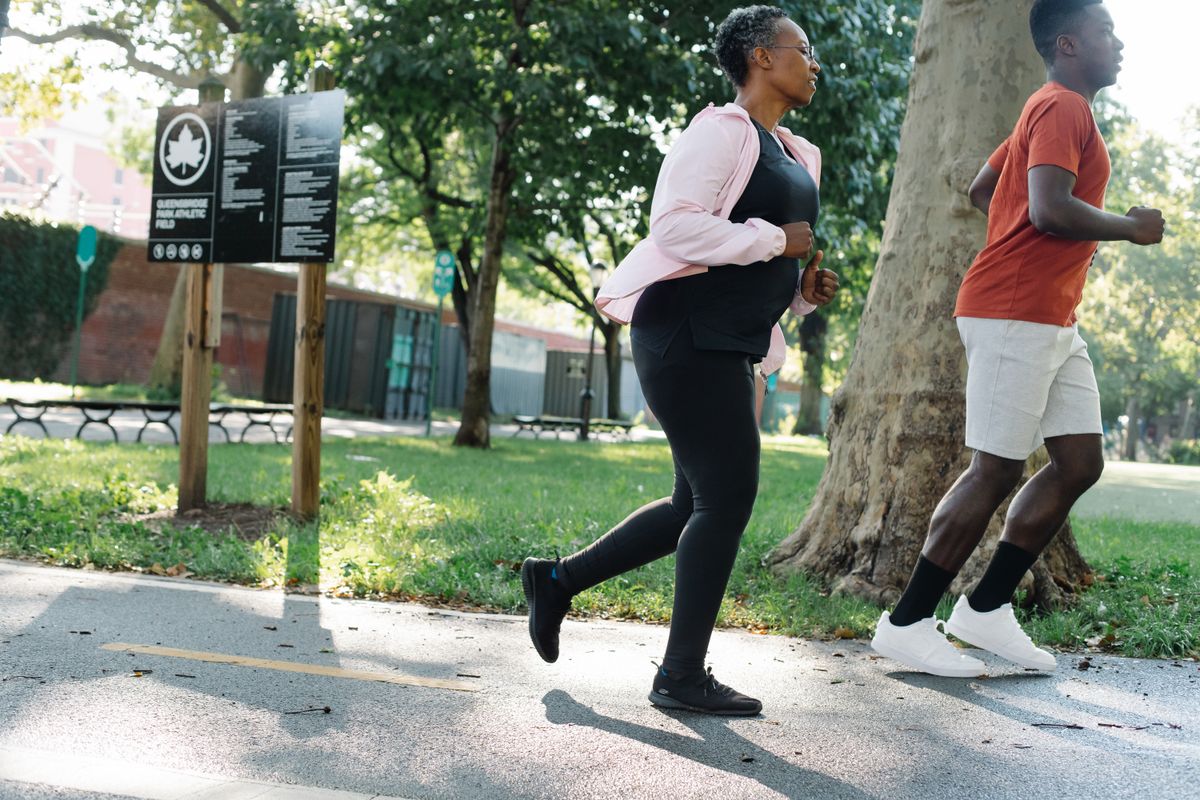 Young man and elderly woman jogging together in a park on a sunny day
Why Some People See Results Faster
Not everyone progresses at the same rate. Research has identified several factors that accelerate — or slow — visible results:
Training history. Complete beginners see the fastest relative gains. If you have never lifted weights, your potential for improvement in the first 12 weeks is dramatically higher than someone returning after a break.
Training frequency. A meta-analysis on VO2 max improvement found that at two to three sessions per week, roughly 50% of participants improved — but at four to five sessions per week, 100% showed gains. Frequency matters more than session length.
Sleep and recovery. Growth hormone — critical for muscle repair and fat metabolism — is released primarily during deep sleep. A 2024 review in the International Journal of Obesity confirmed that recovery quality directly impacts the rate of body composition change from exercise.
Nutrition. Exercise creates the stimulus for adaptation; nutrition provides the raw materials. Without adequate protein (the ACSM recommends 1.2–1.7 g per kg of body weight per day for active adults), muscle repair and growth are compromised regardless of training quality.
Genetics. The HERITAGE Family Study — one of the largest exercise genetics studies ever conducted — found that VO2 max response to identical training varied by as much as threefold between individuals. Some people are high responders; others need more time and volume to see the same results.
How to Measure Progress Beyond the Mirror
The scale and the mirror are the two worst tools for tracking early fitness progress. Here is what to measure instead:
- Resting heart rate — drops within 2–3 weeks of consistent cardio
- Workout performance — more reps, heavier weights, faster recovery between sets
- Energy levels — sustained energy throughout the day, less afternoon fatigue
- Sleep quality — falling asleep faster, waking up more rested
- Measurements — waist, hips, and limb circumference change before the scale does
- How your clothes fit — muscle is denser than fat, so body composition can change without weight changing
Research on exercise adherence consistently shows that people who track multiple markers of progress — not just weight — are significantly more likely to maintain their training long-term.
Track Your Workout Results With Hiitify
Hiitify helps you see the progress that matters. Log every session to build your workout streak — the consistency metric that research says predicts long-term results better than anything else. Track your interval performance over time, and watch your work capacity improve week over week. When the mirror has not caught up yet, your training log tells the real story.
Free on iOS
TRAIN SMARTER
Build custom HIIT, Tabata, AMRAP, EMOM and Circuit workouts. Precision timer, streak tracking and analytics — free on iOS.
Sources & Further Reading
Research
- Singh, B. et al. (2023). Effectiveness of physical activity interventions for improving depression, anxiety and distress: an overview of systematic reviews. British Journal of Sports Medicine. View on PubMed
- Sperlich, B. et al. (2018). A 4-Week Intervention Involving Mobile-Based Daily 6-Minute Micro-Sessions of Functional High-Intensity Circuit Training Improves Strength and Quality of Life. Frontiers in Physiology. View on PMC
- Chidnok, W. et al. (2013). VO2max Trainability and High Intensity Interval Training in Humans: A Meta-Analysis. PLoS ONE. View on PMC
- Garber, C.E. et al. (2011). Quantity and Quality of Exercise for Developing and Maintaining Cardiorespiratory, Musculoskeletal, and Neuromotor Fitness in Apparently Healthy Adults. Medicine & Science in Sports & Exercise (ACSM Position Stand). View on PubMed
- Mikkola, I. et al. (2025). Effects of strength training on neuromuscular adaptations in the development of maximal strength: a systematic review and meta-analysis. Scientific Reports. View on Nature
- Türker, A. et al. (2023). The Effect of High-Intensity Interval Training Type on Body Fat Percentage, Fat and Fat-Free Mass: A Systematic Review and Meta-Analysis. Nutrients. View on PMC
Further Reading
- How Long Does It Take to See Results from Working Out? — Healthline
- How Long Does It Take to See Results from Working Out? — Polar
- Neural Adaptations to Resistance Training — Institute of Human Anatomy
Image Credits
- Cover: Man in white tank top holding exercise equipment — Pexels
- Woman measuring her waist with a tape measure — Pexels
- Young man and elderly woman jogging in park — Pexels
All images free to use under the Pexels License.