The number 10,000 steps is one of the most widely repeated fitness targets in the world. It appears on smartwatch default goals, in doctor's office pamphlets, and across social media. But here is what most people do not know: that number was never based on science. The latest research suggests you may need fewer steps than you think — and you are probably closer to meaningful health benefits than you realize.
The 10,000-Step Myth
The 10,000-step goal traces back to 1964 Tokyo, Japan. A company called Yamasa Clock created a pedometer called the Manpo-kei — which translates to "10,000-step meter" — to capitalize on the fitness enthusiasm surrounding the Tokyo Olympics. The round number was a marketing choice, not a clinical threshold.
As Dr. I-Min Lee, a professor of medicine at Harvard Medical School, has noted: "It was not a scientific study. It was a marketing tool." Yet the number stuck, and decades later it became the default step goal on nearly every fitness tracker sold.
The good news is that peer-reviewed research has now caught up — and the real numbers are more achievable.
What the Science Actually Says
A landmark 2025 meta-analysis led by Professor Melody Ding at the University of Sydney, published in The Lancet Public Health, analyzed 57 studies conducted between 2014 and 2025 across more than ten countries. It is the most comprehensive review to date of how daily steps relate to multiple health outcomes.
The headline finding: 7,000 steps per day is associated with a 47 percent lower risk of all-cause mortality compared to 2,000 steps. But the benefits extend far beyond longevity.
| Health Outcome | Risk Reduction at 7,000+ Steps | Source |
|---|---|---|
| All-cause mortality | 47% lower | Ding et al. (2025), Lancet Public Health |
| Dementia | 38% lower | Ding et al. (2025), Lancet Public Health |
| Type 2 diabetes | 22% lower (at 10,000 steps) | Ding et al. (2025), Lancet Public Health |
| Depression prevalence | 42% lower (at 7,500 steps) | Meta-analysis (2024) |
| Cardiovascular disease | 25% lower | ACC review (2025) |
| Cancer | 6% lower | Ding et al. (2025), Lancet Public Health |
The data is clear: you do not need 10,000 steps to see substantial health improvements. Benefits begin as low as 4,000 steps and accumulate progressively from there.
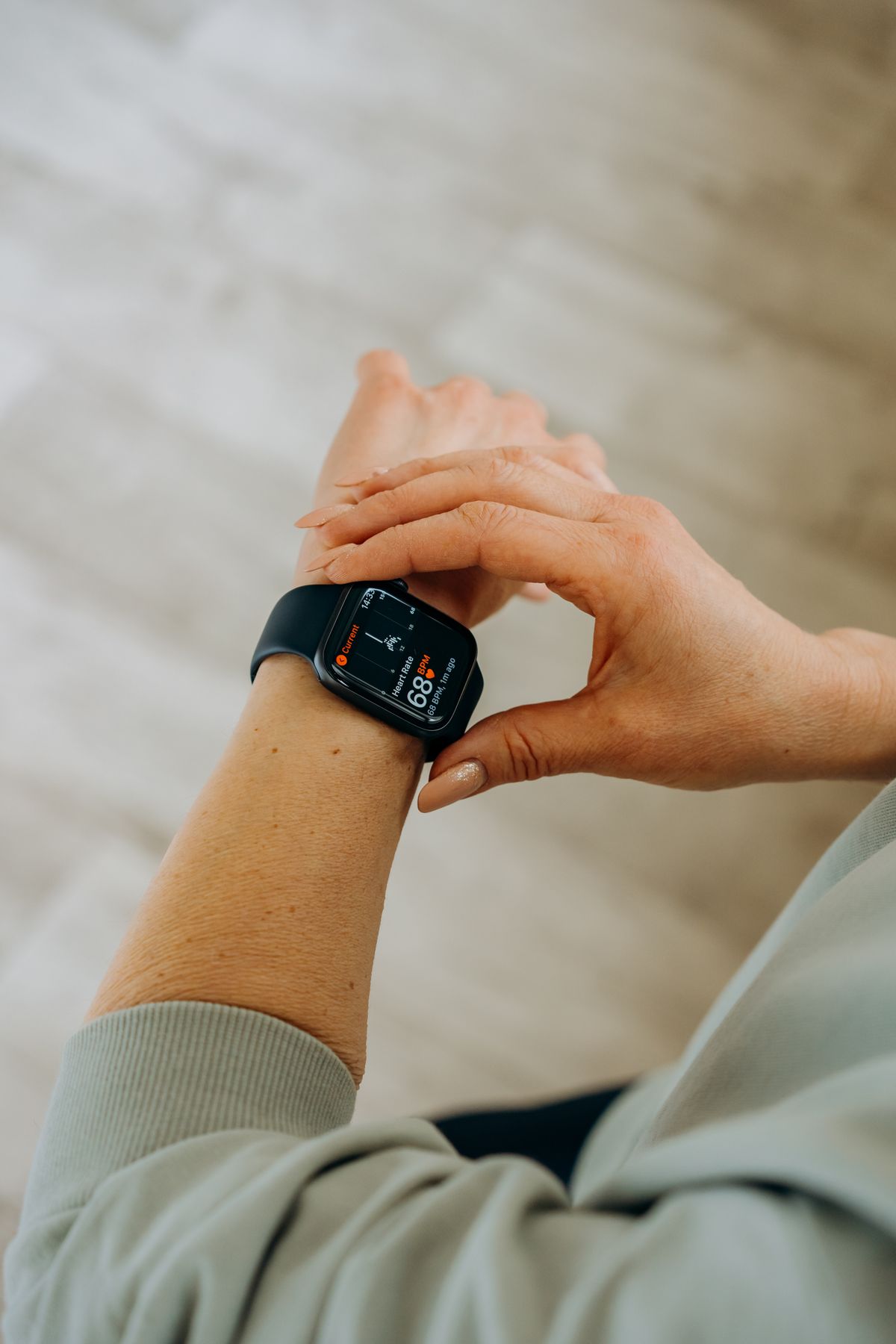 Person checking fitness data on a black smartwatch
Free on iOS
TRAIN SMARTER
Build custom HIIT, Tabata, AMRAP, EMOM and Circuit workouts. Precision timer, streak tracking and analytics — free on iOS.
Your Ideal Step Count Depends on Your Age
Not everyone needs the same number of steps. A 2022 meta-analysis by Dr. Amanda Paluch at the University of Massachusetts Amherst, published in The Lancet Public Health, pooled data from 15 international cohorts covering 47,471 adults with a median follow-up of 7.1 years.
The key finding: the mortality benefit plateaus at different thresholds depending on age.
| Age Group | Optimal Range | Mortality Benefit |
|---|---|---|
| Under 60 | 8,000–10,000 steps/day | 40–53% lower risk of death |
| 60 and older | 6,000–8,000 steps/day | 40–53% lower risk of death |
For older adults, walking beyond 8,000 steps did not provide additional longevity benefits. For younger adults, the curve continued to flatten around 10,000 steps. In both groups, stepping intensity — how fast you walk — did not significantly change the mortality association. What mattered was the total volume of steps.
This means a 65-year-old walking 7,000 steps per day is getting roughly the same survival benefit as a 35-year-old walking 9,000 steps.
Steps, Weight, and Chronic Disease
Walking is not just about living longer — it directly impacts metabolic health and body composition.
Weight management: Research shows that 8,600 steps per day can help prevent weight gain in adults. For those already overweight, increasing to around 11,000 steps per day is associated with halving the odds of becoming obese. Among women, each additional 1,000 daily steps correlated with a 13 percent lower risk of obesity, and those with the highest step counts were 61 percent less likely to be obese compared to the least active women.
Diabetes and hypertension: A study presented at the American Heart Association's Scientific Sessions, led by Dr. Amanda Paluch, followed 1,923 adults for an average of nine years. Those with the highest daily step counts had a 43 percent lower risk of diabetes and a 31 percent lower risk of high blood pressure compared to those who walked the least.
Cardiovascular disease: The 2025 Lancet analysis found that compared with 2,000 steps per day, walking 7,000 steps was linked to a 25 percent lower risk of cardiovascular disease incidence and a 47 percent lower risk of cardiovascular mortality.
 Group of people walking on a mountain trail
How to Get More Steps Into Your Day
You do not need to carve out an hour for a dedicated walk. Small changes throughout the day compound quickly.
Simple Daily Swaps
- Take the stairs — each minute of stair climbing adds roughly 270 steps
- Park further away from store entrances or your office
- Get off one stop early on public transport and walk the rest
- Walk during phone calls that do not require a screen
- Add a 10-minute walk after meals — this also improves post-meal blood sugar
Progressive Targets
If you are currently sedentary, do not leap to 7,000 steps overnight. Build gradually.
| Current Level | Weekly Increase | 4-Week Target |
|---|---|---|
| 2,000 steps/day | +500 steps/week | 4,000 steps/day |
| 4,000 steps/day | +750 steps/week | 7,000 steps/day |
| 7,000 steps/day | +500 steps/week | 9,000 steps/day |
Research shows that even modest increases from a sedentary baseline deliver measurable health gains. The jump from 2,000 to 4,000 steps already provides clinically meaningful reductions in mortality risk.
Make It Social
Walking with a friend, partner, or group increases accountability and makes the habit stick. Dog owners consistently log more daily steps — having a reason to get outside that is not optional helps on low-motivation days.
Track Your Daily Steps With Hiitify
Hiitify helps you build movement into your day with customizable interval timers and workout tracking. Use it to time brisk walking intervals, track your workout streaks, and stay consistent with your activity goals. Whether you are adding post-meal walks or structured walking workouts, Hiitify keeps you accountable and shows you the progress that daily steps deliver over time.
Free on iOS
TRAIN SMARTER
Build custom HIIT, Tabata, AMRAP, EMOM and Circuit workouts. Precision timer, streak tracking and analytics — free on iOS.
Sources & Further Reading
Research
- Ding, M. et al. (2025). Daily steps and health outcomes in adults: a systematic review and dose-response meta-analysis. The Lancet Public Health. View on The Lancet
- Paluch, A.E. et al. (2022). Daily steps and all-cause mortality: a meta-analysis of 15 international cohorts. The Lancet Public Health. View on PubMed
- Paluch, A.E. et al. (2020). Steps per day and cardiovascular risk factors. Presented at AHA EPI/Lifestyle Scientific Sessions. View on AHA Newsroom
- Lee, I-M. et al. (2019). Association of Step Volume and Intensity With All-Cause Mortality in Older Women. JAMA Internal Medicine. View on PubMed
Further Reading
- 7,000 Steps a Day Cuts Death Risk by 47% — ScienceDaily
- How Many Steps a Day to Reduce CVD and CV Death? — American College of Cardiology
- How Many Steps Do You Need a Day to See Health Benefits? — UCLA Health
- How Many Steps Lead to Better Health? — NPR
Image Credits
- Cover: Two People Walking Outdoors — Pexels
- Person Checking Fitness Data on Smartwatch — Pexels
- Group Walking on a Mountain Trail — Pexels
All images free to use under the Pexels License.