After 40, the most important thing you can do for your health is not running more miles or cutting more calories — it is building and keeping muscle. Muscle mass quietly declines every year starting in your 30s, and by the time most people notice, they have already lost a significant amount. This process, called sarcopenia, affects everything from how many calories you burn at rest to your risk of falling, fracturing a bone, or losing your independence. The science is clear: muscle mass matters more after 40 than at any other time in your life.
The Silent Epidemic: Sarcopenia
Sarcopenia — the age-related loss of skeletal muscle mass and function — is one of the most consequential health conditions that most people have never heard of. The numbers are striking:
- Adults lose 3 to 5 percent of muscle mass per decade after 30, accelerating to roughly 8 percent per decade after 40
- After 70, the rate jumps to 15 percent per decade
- Sarcopenia affects an estimated 36 percent of people in their 40s and 38 percent in their 50s
- A 2026 systematic review and meta-analysis of 39 studies involving 76,151 participants confirmed that sarcopenia is a major independent predictor of functional decline and mortality
The decline is not just about looking different in the mirror. It is about losing the tissue that keeps you metabolically healthy, physically capable, and protected against injury.
Why Muscle Is Your Most Important Organ After 40
It Drives Your Metabolism
The relationship between muscle and metabolism is direct. Skeletal muscle burns approximately 6 calories per pound per day at rest, while fat tissue burns only about 2 calories per pound per day. That difference adds up fast.
| Tissue Type | Calories Burned Per Pound Per Day | 20 lbs of Tissue |
|---|---|---|
| Skeletal Muscle | ~6 kcal | ~120 kcal/day |
| Fat Tissue | ~2 kcal | ~40 kcal/day |
| Difference | 3x more for muscle | 80 kcal/day |
When researchers used multiple regression models to identify what drives resting metabolic rate, only muscle mass retained statistical significance — total body fat and even organ-specific fat did not significantly affect RMR after controlling for other variables. Lose 10 pounds of muscle over a decade, and your body burns roughly 60 fewer calories per day at rest. That is over 21,000 calories per year — enough to gain 6 pounds of fat without changing a single thing about your diet.
It Predicts How Long You Live
A landmark study published in The American Journal of Medicine analyzed data from over 3,600 older adults and found that higher muscle mass index was independently associated with lower all-cause mortality. People in the highest quartile of muscle mass had significantly lower death rates than those in the lowest quartile — regardless of fat mass, cardiovascular risk factors, or metabolic conditions.
A separate 12-year prospective cohort study published in BMC Geriatrics confirmed that both skeletal muscle mass and physical performance independently predicted all-cause mortality in older adults. The message from the research is consistent: more muscle means longer life.
It Keeps You Independent
Falls are the leading cause of injury-related death in adults over 65 — and the foundation of fall prevention is muscle. Strong legs provide stability. Strong hips absorb impact. Strong core muscles maintain balance. Every pound of muscle you lose after 40 is a small step toward the threshold where a stumble becomes a fracture and a fracture becomes a loss of independence.
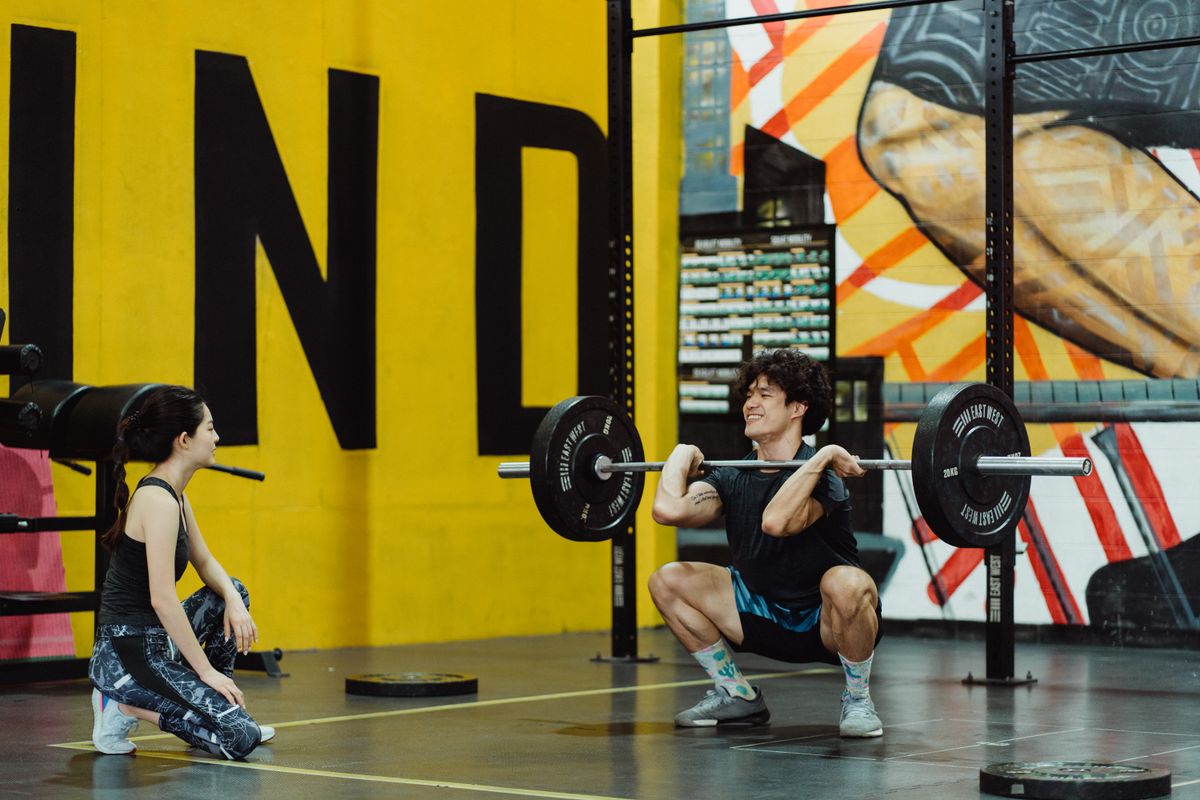 Man holding a barbell on his shoulders during a strength training workout
Free on iOS
TRAIN SMARTER
Build custom HIIT, Tabata, AMRAP, EMOM and Circuit workouts. Precision timer, streak tracking and analytics — free on iOS.
The Anabolic Resistance Problem
One of the most important discoveries in exercise science over the past two decades is anabolic resistance — the phenomenon where aging muscles become less responsive to the signals that trigger muscle growth.
In younger adults, a moderate serving of protein — around 20 to 25 grams — triggers a robust muscle protein synthesis response. But in adults over 40, that same amount produces a blunted response. The muscles are still capable of growing, but they need a stronger stimulus to get started.
This has two practical implications:
- You need more protein per meal. Research suggests that adults over 40 need approximately 40 grams of protein per meal to maximally stimulate muscle protein synthesis — nearly double what younger adults require.
- You need resistance training. Without the mechanical stimulus of progressive overload, extra protein provides minimal muscle-building benefit. The combination of resistance exercise and adequate protein is what overcomes anabolic resistance.
| Factor | Under 40 | Over 40 |
|---|---|---|
| Protein per meal for max MPS | ~25g | ~40g |
| Daily protein target | 1.2–1.6 g/kg | 1.6–2.2 g/kg |
| Meals with substantial protein | 2–3 per day | 3–4 per day |
| Strength training frequency | 2–4x per week | 2–4x per week |
| Recovery between sessions | 24–48 hours | 48–72 hours |
What the Research Says About Resistance Training After 40
The evidence for resistance training as the primary tool against sarcopenia is overwhelming:
- A 2025 systematic review and meta-analysis published in Aging Clinical and Experimental Research analyzed 24 randomized controlled trials involving 951 participants and found that resistance training significantly improved muscle strength, gait speed, and performance on functional tests like the timed up-and-go and five-times sit-to-stand
- A 2025 meta-analysis published in European Review of Aging and Physical Activity confirmed that resistance training improves body composition, muscle strength, and physical performance in older adults with sarcopenia
- Research consistently shows that even adults in their 70s and 80s can gain significant muscle mass and strength with proper resistance training and adequate protein intake
The optimal approach based on current evidence:
- Frequency: 2 to 4 sessions per week
- Exercises: Compound movements — squats, deadlifts, rows, presses, lunges
- Intensity: Moderate to high (60 to 80 percent of one-rep max)
- Volume: 2 to 4 sets per exercise, 6 to 12 reps per set
- Progression: Increase load by 5 to 10 percent per week — tendons adapt 3 to 5 times slower than muscles, so patience prevents injury
 Woman eating a healthy protein-rich salad after a workout
How to Start Building Muscle After 40
1. Prioritize Compound Movements
Squats, hip hinges, rows, presses, and carries train multiple joints and muscle groups simultaneously. They build functional strength that transfers to daily life — picking up grandchildren, carrying groceries, climbing stairs — and they stimulate the greatest hormonal response for muscle growth.
2. Eat Enough Protein
Aim for 1.2 to 1.6 grams of protein per kilogram of bodyweight daily as a minimum, with 40 grams per meal across 3 to 4 meals. Good sources include chicken, fish, eggs, Greek yogurt, legumes, and whey protein. Spreading protein throughout the day is more effective than loading it into one or two meals.
3. Respect Recovery
After 40, connective tissues — tendons, ligaments, and joint capsules — need more time to adapt than muscles. Allow 48 to 72 hours between sessions targeting the same muscle groups. Sleep 7 to 9 hours per night — growth hormone and testosterone peak during deep sleep, and both are essential for muscle repair.
4. Be Consistent Over Intense
The biggest mistake after 40 is training too hard, too soon, getting injured, and stopping. Moderate, consistent training three to four times per week will always outperform sporadic intense sessions. Build the habit first. Progress will follow.
Track Your Muscle-Building Training With Hiitify
Hiitify helps you build structured strength and interval workouts with customizable timers for work and rest periods. Track your training consistency with workout streaks, build progressive routines that respect your recovery needs, and stay on track with a training rhythm designed to build muscle sustainably — not just burn calories.
Free on iOS
TRAIN SMARTER
Build custom HIIT, Tabata, AMRAP, EMOM and Circuit workouts. Precision timer, streak tracking and analytics — free on iOS.
Sources & Further Reading
Research
- Shen, Y. et al. (2026). Long-term impact of sarcopenia on functional decline and mortality in community-dwelling older adults: a systematic review and meta-analysis. PMC. View on PubMed
- Srikanthan, P. & Karlamangla, A.S. (2014). Muscle Mass Index As a Predictor of Longevity in Older Adults. The American Journal of Medicine. View Study
- Lin, Y.H. et al. (2022). Independent and joint associations of skeletal muscle mass and physical performance with all-cause mortality among older adults: a 12-year prospective cohort study. BMC Geriatrics. View Study
- Liao, C.D. et al. (2025). Optimal resistance training prescriptions to improve muscle strength, physical function, and muscle mass in older adults diagnosed with sarcopenia. Aging Clinical and Experimental Research. View Study
- (2025). Optimizing prescription of resistance training for body composition, muscle strength, and physical performance in older adults with sarcopenia. European Review of Aging and Physical Activity. View Study
- Bauer, J. et al. (2013). Protein Requirements and Recommendations for Older People: A Review. JAMDA. View on PubMed
Further Reading
- Slowing Sarcopenia — NIH News in Health
- Sarcopenia (Muscle Loss with Aging) — WebMD
- Protein Needs for Adults 50+ — Stanford Lifestyle Medicine
- Sarcopenia: Symptoms & Causes — Cleveland Clinic
Image Credits
- Cover: Elderly People Working Out at the Gym — Pexels
- Man Holding a Barbell on His Shoulders — Pexels
- Woman Eating Healthy Food — Pexels
All images free to use under the Pexels License.