You did the burpees. You hit every interval. You pushed through the final round. But the workout you just finished is only half the equation — the other half happens tonight, while you sleep. Sleep and HIIT recovery are inseparable, and understanding why can be the difference between steady progress and a frustrating plateau.
What Happens to Your Body During Sleep
Sleep is not a passive shutdown. It is an active, multi-stage process where your body repairs, rebuilds, and consolidates the work you did during training.
Each night you cycle through four sleep stages roughly every 90 minutes. Two of them matter most for HIIT recovery:
Deep NREM sleep (Stage 3) is the physical repair phase. During this stage, your pituitary gland releases approximately 70% of its daily growth hormone (HGH), which drives protein synthesis and repairs the micro-tears in muscle fibres caused by high-intensity exercise. Your body also replenishes muscle glycogen — the primary fuel source for HIIT efforts — and clears metabolic waste products from your tissues. A study published in the Journal of the American Medical Association confirmed that the more deep sleep you get, the more HGH is released. Skimp on sleep, and this process is cut short.
REM sleep handles the neural side. This is where your brain consolidates motor patterns and neuromuscular coordination — the timing, balance, and movement efficiency you practised during your workout. If you are learning a new exercise or refining a skill, REM sleep is when that learning sticks.
| Sleep Stage | Primary Function | HIIT Recovery Role |
|---|---|---|
| NREM Stage 1–2 | Light sleep, heart rate drops | Transition to deeper repair |
| NREM Stage 3 (Deep) | Growth hormone release, tissue repair | Muscle repair, glycogen restoration |
| REM | Brain activity, dreaming | Motor learning, coordination |
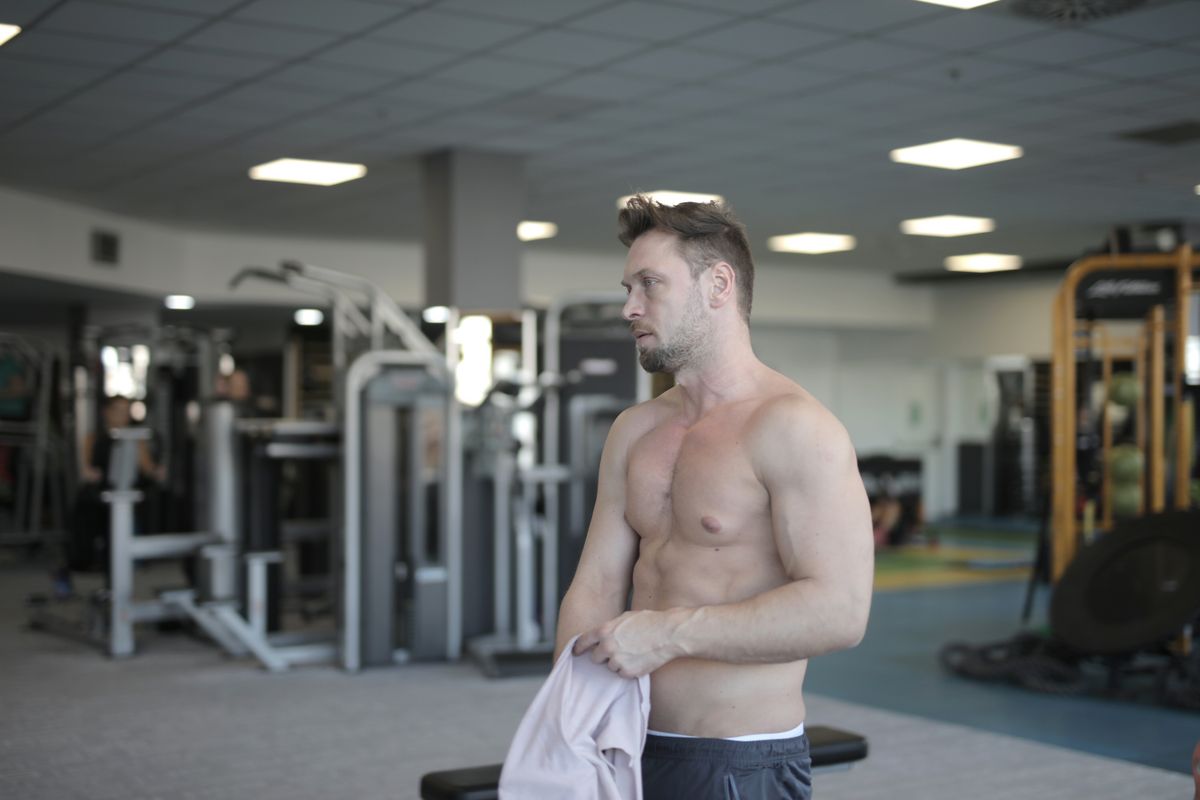 Athlete resting after an intense gym training session
Free on iOS
TRAIN SMARTER
Build custom HIIT, Tabata, AMRAP, EMOM and Circuit workouts. Precision timer, streak tracking and analytics — free on iOS.
What Sleep Deprivation Actually Costs You
The consequences of poor sleep are not vague — they are measurable.
A study published in Life Sciences found that sleep deprivation after high-intensity exercise reduced protein synthesis, directly slowing the body's ability to repair muscle damage. Separate research showed that even a single night of partial sleep deprivation decreased endurance performance on the following day, without any change in how hard the effort felt — meaning you perform worse and do not even realise it.
The numbers add up fast:
- 3–9% reduction in maximum power output after poor sleep
- 1.7 times higher injury risk for athletes sleeping fewer than 8 hours per night over 14 days
- Elevated cortisol and suppressed testosterone — a hormonal environment that favours muscle breakdown over repair
- Impaired glycogen resynthesis, reducing your fuel reserves for the next session
A 2025 randomised crossover study found that adding just 55 minutes of extra sleep for a single night significantly improved both physical and cognitive performance the next morning. Sleep is not a luxury — it is a performance variable.
How Much Sleep Do You Actually Need?
The general recommendation for adults is 7–9 hours. But if you are doing HIIT regularly, the evidence suggests you need more.
A widely cited study from Stanford University tracked collegiate basketball players who extended their sleep to 10 hours per night for 5–7 weeks. The results were striking: sprint times improved, free-throw accuracy increased by 9%, three-point shooting jumped by 9.2%, and players reported feeling better physically and mentally. A separate survey of elite athletes found they needed an average of 8.3 hours to feel fully recovered — yet they only got 6.7 hours on average.
The gap between what your body needs and what it actually gets may be the most overlooked bottleneck in your training.
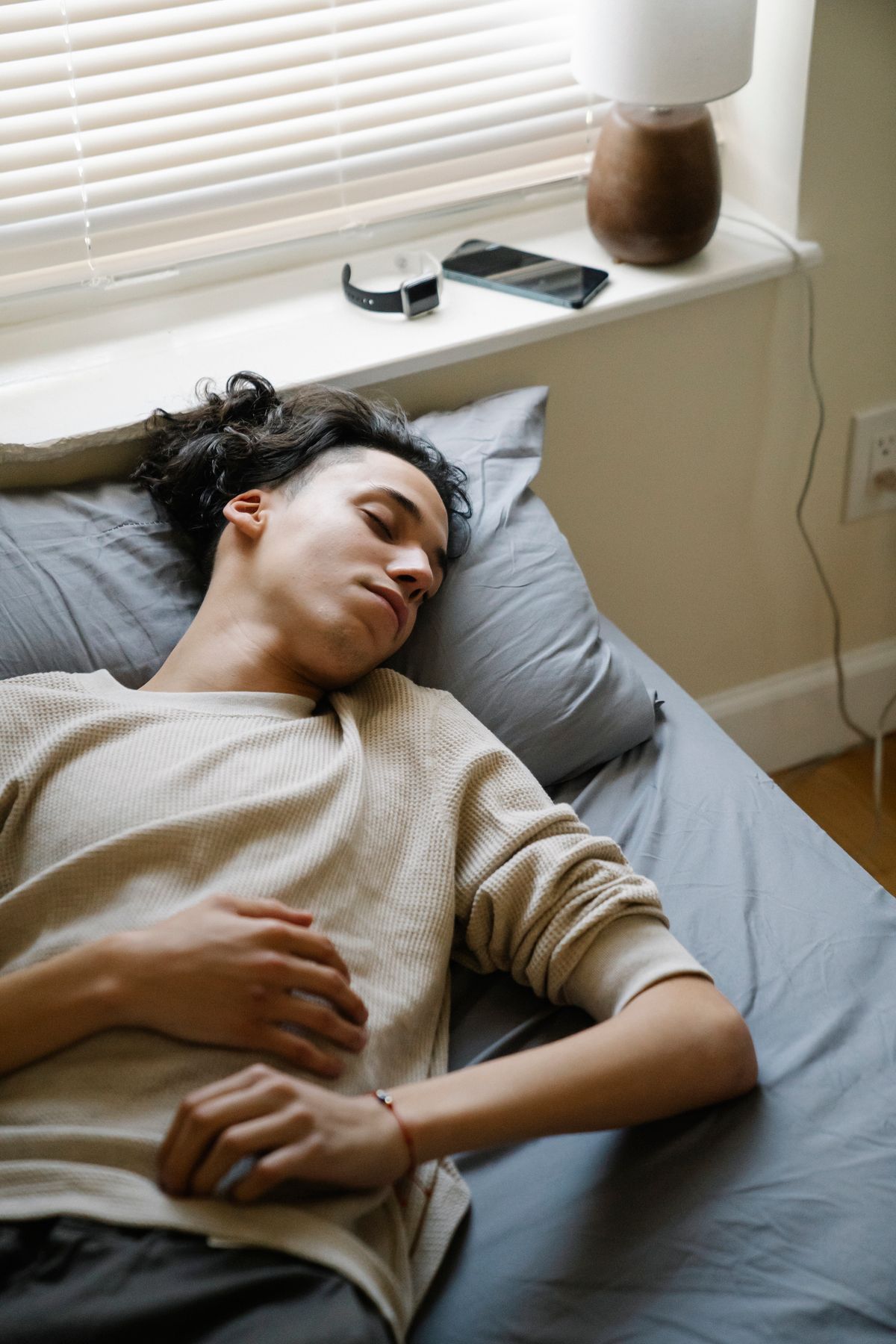 Young man sleeping restfully in bed in the morning
Five Ways to Sleep Better for HIIT Recovery
Research-backed sleep hygiene is not complicated, but it does require consistency.
1. Time Your Training
HIIT creates intense sympathetic nervous system activation. Post-session, catecholamine levels can take 2–4 hours to return to baseline. Finish high-intensity sessions at least 3–4 hours before bedtime. Morning HIIT, on the other hand, has been shown to improve sleep quality — a 2019 study found it reduced sleep onset latency in adults with chronic insomnia.
2. Keep a Consistent Schedule
Go to bed and wake up at the same time every day — including weekends. This strengthens your circadian rhythm, the internal clock that regulates melatonin production. A review published in the British Journal of Sports Medicine found that consistent sleep schedules were one of the strongest predictors of sleep quality in athletes.
3. Control Your Environment
Keep your bedroom dark, cool (18–20°C), and quiet. Blue light from screens suppresses melatonin, so consider blue light-blocking glasses or a screen curfew 60–90 minutes before bed. Strategic morning light exposure — even 10–15 minutes of natural sunlight — helps maintain circadian alignment and makes it easier to fall asleep at night.
4. Use Strategic Naps
If you trained early and slept less than 7 hours, a 20–30 minute nap before 3 PM can help. Research shows short naps restore alertness and support recovery without disrupting nighttime sleep. Avoid naps longer than 90 minutes, which can cause grogginess and shift your sleep drive.
5. Fuel Recovery Before Bed
A small protein-rich snack 30–60 minutes before bed — such as casein protein or Greek yoghurt — provides amino acids for overnight muscle repair. Avoid large meals, caffeine within 6 hours of bedtime, and alcohol, which fragments sleep architecture and suppresses deep sleep.
The HIIT–Sleep Feedback Loop
Here is what makes this relationship so important: HIIT and sleep reinforce each other in both directions. Regular HIIT improves sleep quality by increasing the drive for deep sleep and regulating circadian rhythms. Better sleep, in turn, improves HIIT performance, recovery, and consistency. Research supports 2–3 HIIT sessions per week as the sweet spot for both performance and sleep — going beyond four sessions per week can suppress heart rate variability and push you toward overreaching within 3–4 weeks.
When you treat sleep as part of your training — not something that happens around it — you unlock a compounding cycle where every session builds on the recovery from the last.
Track Your Recovery With Hiitify
Hiitify helps you manage the balance between training and rest. Use custom interval timers to structure your HIIT sessions, track your workout streaks to spot early signs of overtraining, and log every session so you can correlate your performance with how well you slept. When recovery is part of the plan, progress follows.
Free on iOS
TRAIN SMARTER
Build custom HIIT, Tabata, AMRAP, EMOM and Circuit workouts. Precision timer, streak tracking and analytics — free on iOS.
Sources & Further Reading
Research
- Mah, C.D. et al. (2011). The Effects of Sleep Extension on the Athletic Performance of Collegiate Basketball Players. Sleep. View on PubMed
- Dattilo, M. et al. (2011). Sleep and Muscle Recovery: Endocrinological and Molecular Basis for a New and Promising Hypothesis. Medical Hypotheses. View on PubMed
- Souissi, N. et al. (2019). Sleep deprivation reduces the recovery of muscle injury induced by high-intensity exercise in a mouse model. Life Sciences. View on PubMed
- Milewski, M.D. et al. (2014). Chronic Lack of Sleep Is Associated With Increased Sports Injuries in Adolescent Athletes. Journal of Pediatric Orthopaedics. View on PubMed
- Vitale, K.C. et al. (2019). Sleep Hygiene for Optimizing Recovery in Athletes: Review and Recommendations. International Journal of Sports Medicine. View on PMC
- Saidi, O. et al. (2025). Single-Night Sleep Extension Enhances Morning Physical and Cognitive Performance. PMC. View on PMC
Further Reading
- Sleep, Athletic Performance, and Recovery — Sleep Foundation
- The Power of Sleep in Recovery and Exercise Performance — Pnoe
- Sleep and the Elite Athlete — Gatorade Sports Science Institute
Image Credits
- Cover: Man sleeping peacefully in dim room — Pexels
- Sweaty sportsman resting after training in gym — Pexels
- Young man sleeping on bed in morning — Pexels
All images free to use under the Pexels License.