Most people start HIIT to burn calories or improve cardio fitness. But there is another question worth asking: what muscles does HIIT actually work? The answer depends on which exercises you choose — and the science shows HIIT can target nearly every major muscle group in your body.
How HIIT Activates Muscles Differently
HIIT is not just fast cardio. The explosive, high-effort intervals recruit fast-twitch (Type II) muscle fibers — the same fibers used for sprinting, jumping, and lifting heavy weights. A 2025 review by Hung, Su, and Wang published in Life (MDPI) analyzed research from 2000 to 2025 and found that HIIT significantly improves neuromuscular activation by increasing motor unit recruitment and synchronization, particularly in fast-twitch fibers essential for explosive movements.
This matters because fast-twitch fibers have a higher potential for hypertrophy than slow-twitch fibers. It also means HIIT promotes shifts toward Type II and hybrid Type IIa fibers, enhancing both strength and endurance simultaneously.
Traditional steady-state cardio, by contrast, primarily engages slow-twitch (Type I) fibers — great for endurance, but less effective at building power or preserving muscle mass.
The Major Muscle Groups HIIT Targets
Which muscles fire depends entirely on which exercises you include. Here is a breakdown of how common HIIT movements map to specific muscle groups:
| Exercise | Primary Muscles | Secondary Muscles |
|---|---|---|
| Jump squats | Quadriceps, glutes | Hamstrings, calves, core |
| Burpees | Chest, quads, glutes | Shoulders, triceps, core |
| Mountain climbers | Core, hip flexors | Shoulders, quads, glutes |
| Jumping lunges | Quads, glutes, hamstrings | Calves, core |
| Push-ups | Chest, triceps | Shoulders, core |
| High knees | Hip flexors, quads | Calves, core |
| Kettlebell swings | Glutes, hamstrings | Core, shoulders, back |
| Box jumps | Quads, glutes, calves | Hamstrings, core |
The takeaway: a well-designed HIIT circuit can hit every major muscle group in a single session — legs, glutes, core, chest, shoulders, back, and arms.
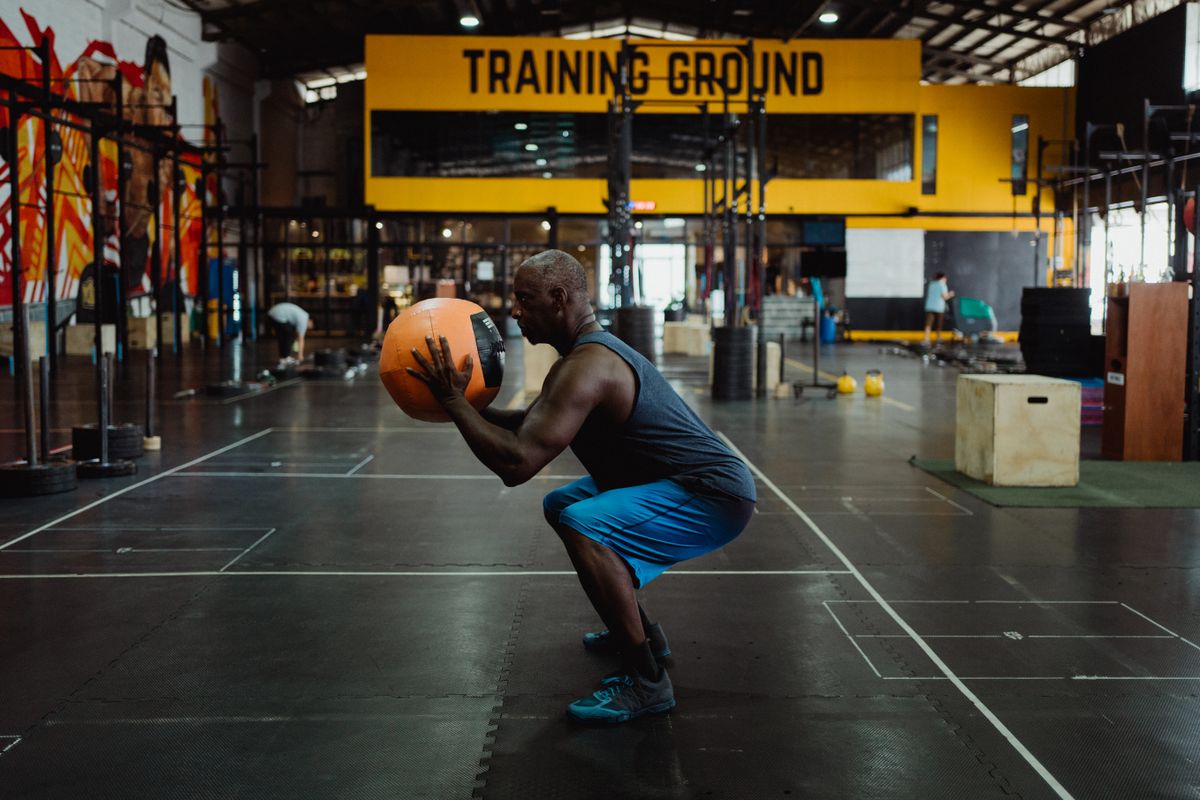 Man performing a squat exercise with a medicine ball in a gym
Lower Body: The Powerhouse of HIIT
The quadriceps, glutes, and hamstrings dominate most HIIT protocols. Squats, lunges, jumps, and sprints all demand powerful leg drive, which is why your legs often feel the burn first.
EMG (electromyography) research consistently shows that squats produce some of the highest muscle activation across the quads, hamstrings, and glutes compared to other lower body exercises. When you add the explosive component — like a jump squat or a sprint — you recruit even more fast-twitch fibers.
A 2023 study published in PLOS ONE examined 12 weeks of HIIT cycling in both young and older adults and found significant improvements in lower limb lean mass, peak torque, and rate of force development. This suggests HIIT does not just activate the lower body — it can genuinely strengthen it.
Your calves also work harder than you might expect. Every jumping and sprinting movement demands calf engagement for push-off and landing stabilization.
Free on iOS
TRAIN SMARTER
Build custom HIIT, Tabata, AMRAP, EMOM and Circuit workouts. Precision timer, streak tracking and analytics — free on iOS.
Core: The Silent Workhorse
Your core is active in virtually every HIIT exercise, even when it is not the primary target. Exercises like mountain climbers and burpees demand rapid trunk stabilization, while squats and lunges require the core to keep your torso upright under fatigue.
The muscles involved include the rectus abdominis (the "six-pack" muscle), the obliques (side stabilizers), and the transverse abdominis (the deep stabilizer that acts like a natural weight belt).
A 2024 study on Total Body HIIT in older adults measured peak electromyography (pEMG) across multiple muscle groups and found significant increases in muscle activation after a 12-week protocol — including the core musculature. The protocol used progressive work-to-rest ratios (20s:40s, then 30s:30s, then 40s:20s) at 85–95% of max heart rate.
If you want to maximize core activation in your HIIT workouts, prioritize exercises that challenge stability: planks, mountain climbers, single-leg movements, and any exercise performed standing rather than seated.
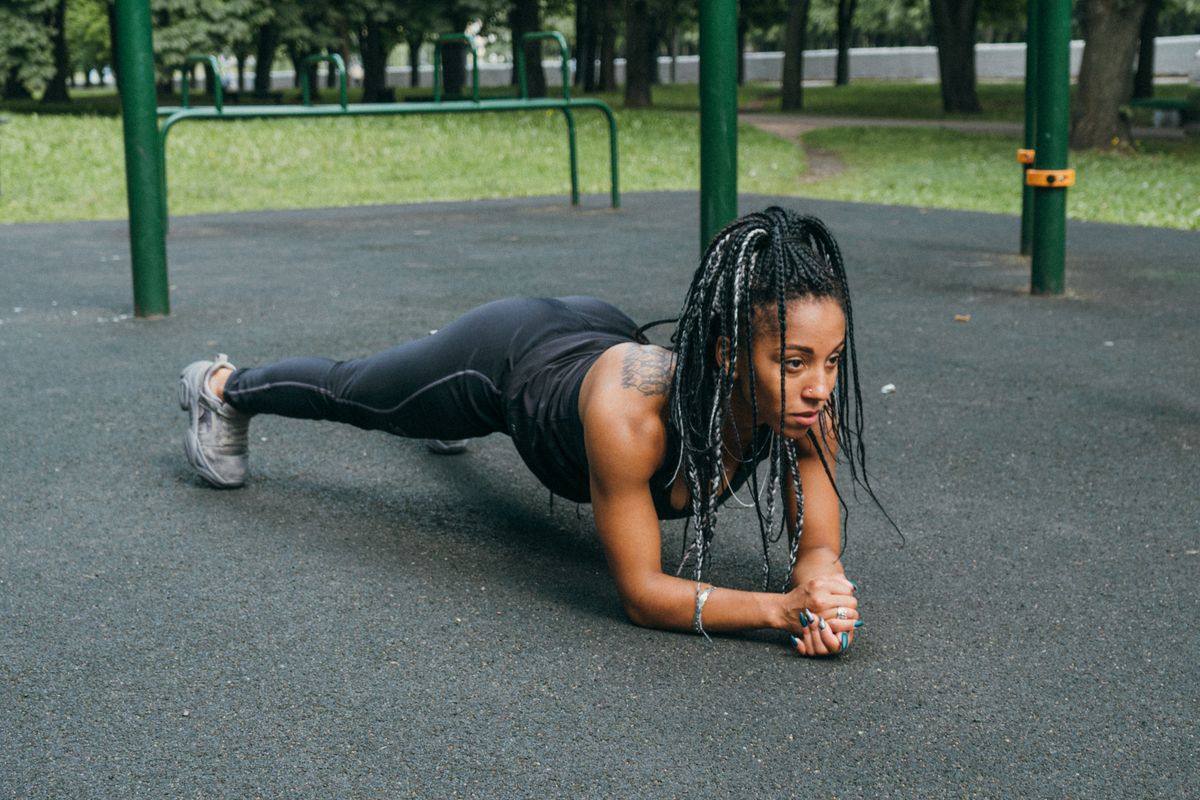 Woman doing a plank exercise outdoors in a park
Upper Body: Often Underrated
Sprint-only HIIT is heavily lower-body dominant. But most bodyweight HIIT circuits include movements that work the upper body effectively:
- Burpees hit the chest, shoulders, and triceps during the push-up phase, then the legs and core during the jump
- Push-ups (and variations like diamond or decline) target the pectoralis major, anterior deltoids, and triceps
- Mountain climbers load the shoulders isometrically while the legs drive
- Kettlebell swings engage the posterior chain — glutes and hamstrings — but also recruit the shoulders, upper back, and grip
The key is exercise selection. If your HIIT routine is all squats and sprints, your upper body will not get much stimulus. Add push-ups, rows, or overhead presses into your intervals and you turn a leg-dominant session into a full-body workout.
HIIT vs. Steady-State Cardio for Muscle Preservation
One of the most important practical differences between HIIT and traditional cardio is how they affect muscle mass over time.
Research by Stöggl and Sperlich (2014) found that HIIT is more effective at preserving lean mass compared to steady-state cardio. The high-intensity intervals stimulate muscle fibers in a way similar to resistance training, which helps prevent the muscle loss often associated with prolonged endurance exercise.
A 2012 study comparing the two approaches found that the steady-state group lost lean body mass, while the HIIT group maintained it. More recent meta-analyses have confirmed the trend, though the absolute differences are modest: one analysis found HIIT participants gained an average of 0.11 kg of fat-free mass versus 0.07 kg in the moderate-intensity group.
The bottom line: if your goal is to lose fat without sacrificing muscle, HIIT has a meaningful edge over long, slow cardio sessions.
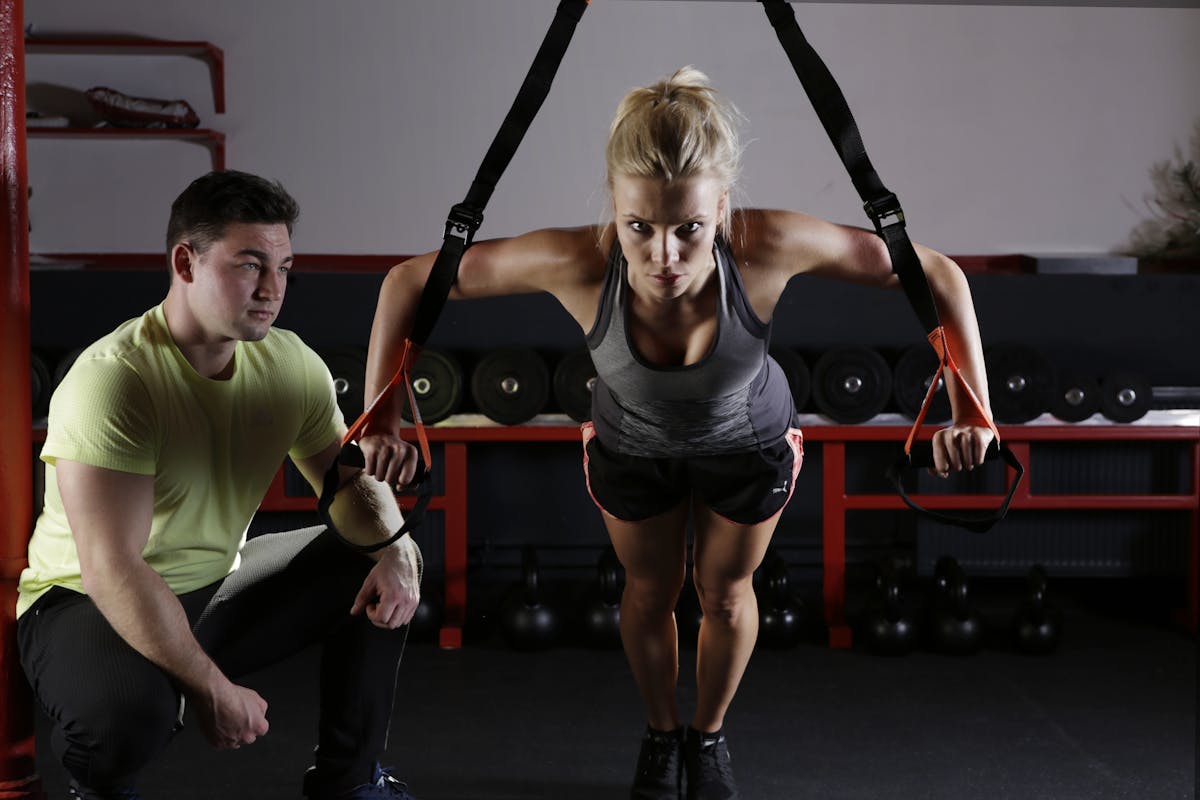 Woman doing a dumbbell exercise with a trainer in a gym
How to Build a HIIT Workout That Hits Every Muscle Group
To ensure balanced muscle development, structure your HIIT circuits to include movements from each category:
Sample Full-Body HIIT Circuit
| Round | Exercise | Work | Rest | Primary Targets |
|---|---|---|---|---|
| 1 | Jump squats | 30s | 15s | Quads, glutes |
| 2 | Push-ups | 30s | 15s | Chest, triceps |
| 3 | Mountain climbers | 30s | 15s | Core, shoulders |
| 4 | Jumping lunges | 30s | 15s | Quads, hamstrings, glutes |
| 5 | Burpees | 30s | 15s | Full body |
| 6 | Plank hold | 30s | 60s | Core, shoulders |
Repeat for 3–4 rounds. Total time: 18–24 minutes.
This structure ensures you hit the lower body, upper body, and core in every round — with compound movements that keep your heart rate elevated throughout.
Tips for Balanced Muscle Activation
- Pair pushing and pulling movements when possible (push-ups + rows)
- Include at least one single-leg exercise (lunges, step-ups) to address imbalances
- Do not skip the posterior chain — glute bridges, kettlebell swings, and broad jumps target the backside muscles that squats alone can miss
- Progress the difficulty by adding load, increasing speed, or extending work intervals
Track Your Muscle-Building HIIT Workouts With Hiitify
Hiitify lets you build custom HIIT timers with the exact work-to-rest ratios you need for full-body circuits. Track your completed rounds, monitor workout streaks, and log the exercises that target the muscle groups you care about most — all from your phone.
Free on iOS
TRAIN SMARTER
Build custom HIIT, Tabata, AMRAP, EMOM and Circuit workouts. Precision timer, streak tracking and analytics — free on iOS.
Sources & Further Reading
Research
- Hung, Y.C., Su, K.H., and Wang, C.H. (2025). The Role of High-Intensity Interval Training (HIIT) in Neuromuscular Adaptations: Implications for Strength and Power Development — A Review. Life, 15(4), 657. View on PMC
- Callahan, M.J. et al. (2023). Effects of high-intensity interval training on lean mass, strength, and power of the lower limbs in healthy old and young people. PLOS ONE. View on PMC
- Stöggl, T. and Sperlich, B. (2014). Polarized training has greater impact on key endurance variables than threshold, high-intensity, or high-volume training. Frontiers in Physiology.
- Martins, C. et al. (2024). The Impact of HIIT on Muscular, Endurance, and Quality of Life Metrics in Older Adults. PMC. View on PMC
- Gentil, P. et al. (2021). Can High-Intensity Interval Training Promote Skeletal Muscle Anabolism? Sports Medicine. View on Springer
- Evangelista, A.L. et al. (2024). Different whole body HIIT protocols do not promote different muscle thickness and functional adaptations among healthy physically active subjects. Frontiers in Sports and Active Living. View on Frontiers
Further Reading
- The Best HIIT Workout for Muscle Building — PureGym
- Muscles with HIIT: Busting The Myth — Crunch Fitness
- HIIT vs Steady-State Cardio for Fat Loss — SET FOR SET
Image Credits
- Cover: Photo of man with muscular body — Pexels
- Man doing squat while holding a gym ball — Pexels
- Photo of a woman working out — Pexels
- Woman doing exercise — Pexels
All images free to use under the Pexels License.