Your HIIT workout is only as good as the fuel behind it. You can follow the perfect interval protocol, but if your nutrition is off — too little before, too late after — you leave performance and recovery on the table. Understanding what to eat before and after a HIIT workout is one of the simplest ways to train harder, recover faster, and get more from every session.
Why Nutrition Matters More for HIIT Than Steady-State Cardio
HIIT places unique demands on your energy systems. During a 20-second all-out sprint, your muscles burn through glycogen — stored carbohydrate — at a rate far higher than during a jog or a bike ride. A study by Ivy et al. (1988) demonstrated that delaying carbohydrate intake by just two hours after glycogen-depleting exercise reduced glycogen resynthesis by approximately 45% compared to eating immediately. When your next session is 24–48 hours away, that gap matters.
On the recovery side, HIIT also triggers significant muscle protein synthesis (MPS). A systematic review published in Sports Medicine (2022) found that both HIIT and resistance training stimulate MPS for up to two days post-exercise — and that protein ingestion further amplifies the response. In other words, what you eat after HIIT directly influences how well your muscles repair and adapt.
What to Eat Before HIIT
Your pre-workout meal has one job: give your muscles the fuel they need without sitting heavy in your stomach. The key is timing and composition.
2–3 Hours Before
If you have time for a full meal, aim for a balanced plate of complex carbohydrates, moderate protein, and low fat. Fat and fibre slow digestion, which is fine when you have a 2–3 hour buffer.
Good options: oatmeal with banana and a scoop of protein powder, a chicken and rice bowl, or whole-grain toast with eggs.
30–60 Minutes Before
When time is short, switch to fast-digesting carbohydrates with minimal fat and fibre. A 2020 review by Arent et al. in Nutrients recommends 0.5–2.2 g/kg of carbohydrates combined with 0.3–0.35 g/kg of protein in the pre-exercise window for optimal performance.
Good options: a banana, white toast with honey, a small handful of dried fruit, or a rice cake with jam.
| Timing | Carbs | Protein | Fat | Example Meal |
|---|---|---|---|---|
| 2–3 hours before | 40–60 g | 20–30 g | 10–15 g | Oatmeal, banana, protein scoop |
| 60–90 minutes before | 30–50 g | 10–20 g | 5–10 g | Toast with eggs |
| 30–60 minutes before | 20–40 g | 0–10 g | Minimal | Banana or rice cake with honey |
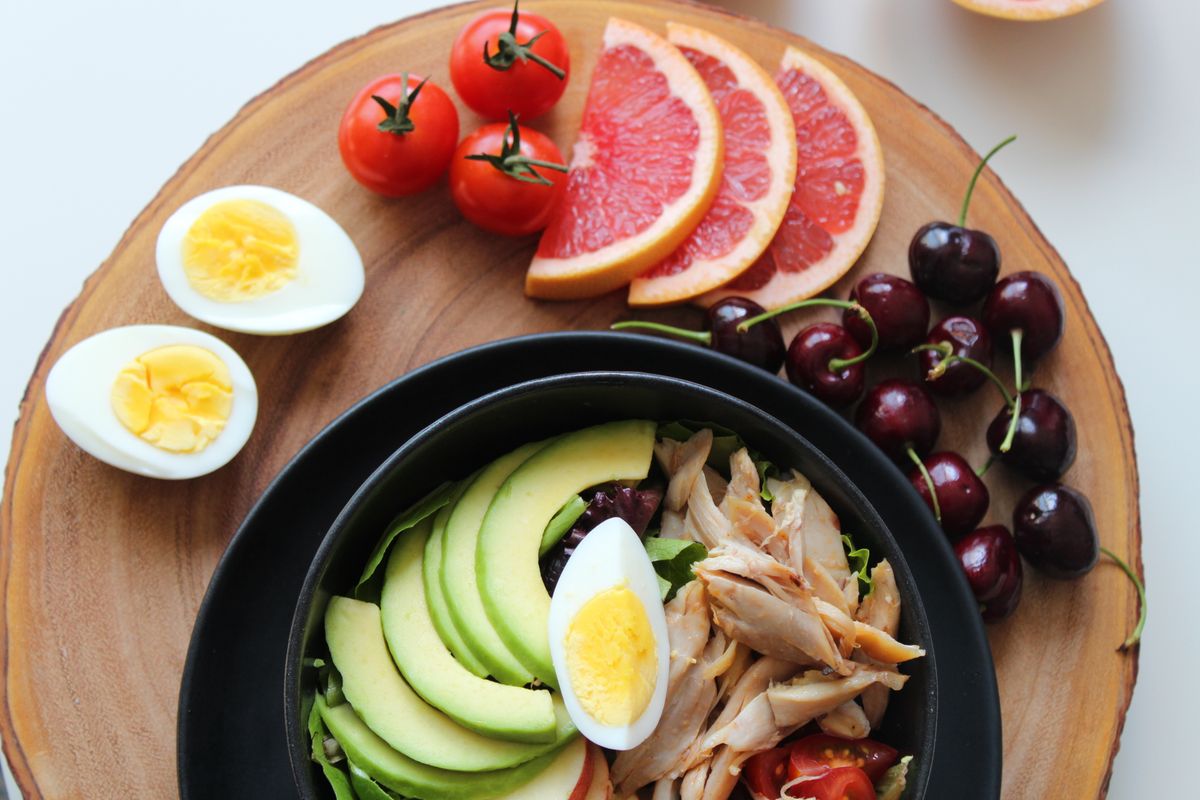 Variety of healthy foods including avocado, eggs, and fresh vegetables on a wooden board
The Fasted HIIT Debate
Training on an empty stomach is popular, especially for early-morning workouts. But does the science support it?
A 2021 study by Rothschild et al. compared three conditions in trained cyclists: pre-exercise carbohydrates (1 g/kg), pre-exercise protein (0.45 g/kg), and fasted (water only). The results were clear on two points:
- Fat oxidation was higher in the fasted and protein-fed conditions compared to carbohydrate-fed
- High-intensity performance was identical across all three groups — average power output during intervals did not differ
However, a meta-analysis of 27 studies (Hackett & Hagstrom, 2017) found that while fasted exercise increases fat oxidation during the session, it does not produce greater fat loss over time when total calorie intake is equal. Fasted training also tends to increase perceived exertion, meaning the same workout feels harder.
The practical takeaway: if you feel fine training fasted and your performance does not suffer, it is a valid option. But if you want to push harder and feel better during HIIT, a small pre-workout snack will help — without hurting fat loss.
Free on iOS
TRAIN SMARTER
Build custom HIIT, Tabata, AMRAP, EMOM and Circuit workouts. Precision timer, streak tracking and analytics — free on iOS.
What to Eat After HIIT
Post-workout nutrition serves two goals: restore glycogen and stimulate muscle protein synthesis. The research is clear on what works.
Protein for Muscle Repair
The 2020 review by Arent et al. recommends at least 40 g of high-quality protein (such as whey) after resistance-style training to maximise MPS. For a typical HIIT session, 20–40 g of protein within 1–2 hours is a solid target. A study by Esmarck et al. (2001) found that consuming protein immediately after training produced measurable muscle growth, while delaying intake by just two hours eliminated the hypertrophy response entirely.
Carbohydrates for Glycogen
To restore glycogen at the fastest rate, research recommends 1.0–1.5 g/kg/hour of carbohydrates for the first 4–6 hours after exercise. A widely cited guideline is a 3:1 carbohydrate-to-protein ratio in your post-workout meal. Adding protein to suboptimal carbohydrate intake can further boost glycogen resynthesis.
The "Garage Door" of Opportunity
The old idea of a narrow 30-minute "anabolic window" has been replaced by a more nuanced view. Arent et al. describe nutrient timing as a "garage door of opportunity" — a broader window that remains open for several hours post-exercise. That said, eating sooner is still better than eating later, especially if your next training session is within 24 hours.
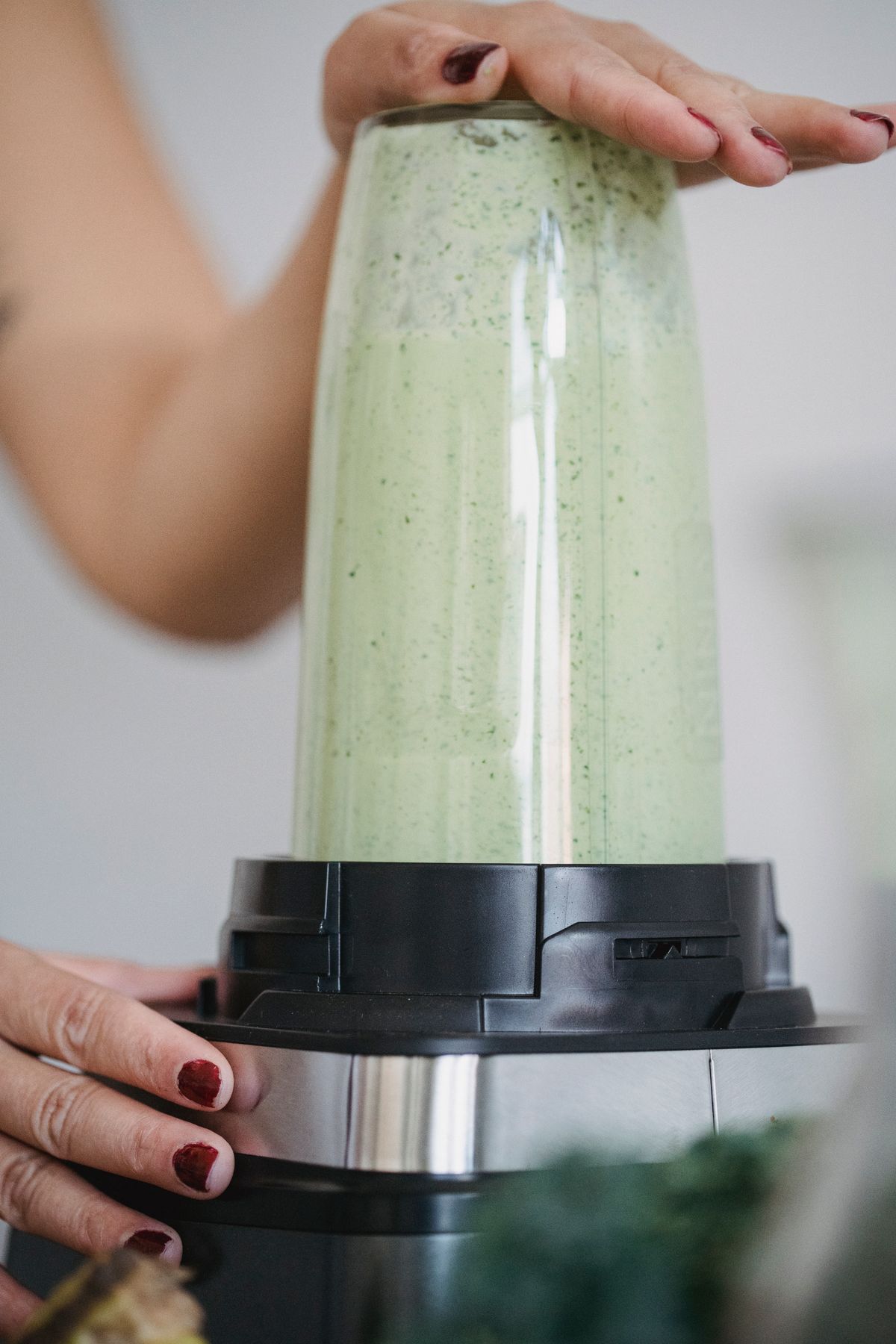 Person blending a nutritious green smoothie in a kitchen
Post-Workout Meal Ideas
Here are practical meals that hit the right macronutrient targets after a HIIT session:
| Meal | Protein | Carbs | Why It Works |
|---|---|---|---|
| Greek yoghurt + granola + berries | ~25 g | ~45 g | Fast prep, good ratio |
| Chicken breast + sweet potato + greens | ~35 g | ~50 g | Complete whole-food meal |
| Protein shake + banana + oats | ~30 g | ~55 g | Quick liquid option |
| Eggs on toast + avocado | ~25 g | ~35 g | Balanced fats and protein |
| Tuna wrap + rice + vegetables | ~30 g | ~45 g | Easy to meal-prep |
The best post-workout meal is one you will actually eat consistently. Fancy recipes you skip half the time lose to a simple protein shake you have every session.
Do Not Forget Hydration
Water is the most overlooked part of HIIT nutrition. A fluid loss of just 2% of body weight — about 1.4 litres for a 70 kg person — has been shown to impair exercise performance by up to 25%. During a 20–30 minute HIIT session, you can easily lose 500–800 mL of sweat depending on conditions.
Before: drink 400–600 mL of water in the 2 hours before training. During: sip water between rounds if needed — there is no need to force large amounts. After: replace 150% of fluid lost. If you lost 500 mL during the session, aim for 750 mL over the next 2 hours.
For sessions under 60 minutes, water is enough. Sports drinks with electrolytes are only necessary for prolonged or extremely hot training.
Track Your HIIT Nutrition With Hiitify
Hiitify helps you build consistent training habits that complement your nutrition strategy. Use custom interval timers to structure your HIIT sessions, track your workout streaks to stay accountable, and log every session so you can see how your performance improves as your fuelling gets dialled in.
Free on iOS
TRAIN SMARTER
Build custom HIIT, Tabata, AMRAP, EMOM and Circuit workouts. Precision timer, streak tracking and analytics — free on iOS.
Sources & Further Reading
Research
- Ivy, J. L. et al. (1988). Muscle glycogen synthesis after exercise: effect of time of carbohydrate ingestion. Journal of Applied Physiology. View on PubMed
- Esmarck, B. et al. (2001). Timing of postexercise protein intake is important for muscle hypertrophy with resistance training in elderly humans. Journal of Physiology. View on PubMed
- Arent, S. M. et al. (2020). Nutrient Timing: A Garage Door of Opportunity? Nutrients. View on PMC
- Rothschild, J. A. et al. (2021). Pre-Exercise Carbohydrate or Protein Ingestion Influences Substrate Oxidation but Not Performance or Hunger. Nutrients. View on PMC
- Hackett, D. & Hagstrom, A. D. (2017). Effect of Overnight Fasted Exercise on Weight Loss and Body Composition: A Systematic Review and Meta-Analysis. Journal of Functional Morphology and Kinesiology. View on MDPI
- Kerksick, C. M. et al. (2017). International Society of Sports Nutrition Position Stand: Nutrient Timing. Journal of the International Society of Sports Nutrition. View on PMC
Further Reading
- What to Eat Before & After HIIT Workouts — Food Network
- The Role of Post-Exercise Nutrient Administration on Muscle Protein Synthesis and Glycogen Synthesis — PMC
- Maximizing Post-exercise Anabolism: The Case for Relative Protein Intakes — Frontiers
Image Credits
- Cover: Healthy food on a bowl — Pexels
- Variety of food on wooden coaster — Pexels
- A person making smoothie using a blender — Pexels
All images free to use under the Pexels License.